Berik Alibay on Kazakh jewelry art: traditions, the culture of wearing jewelry, and the book "Zerger"
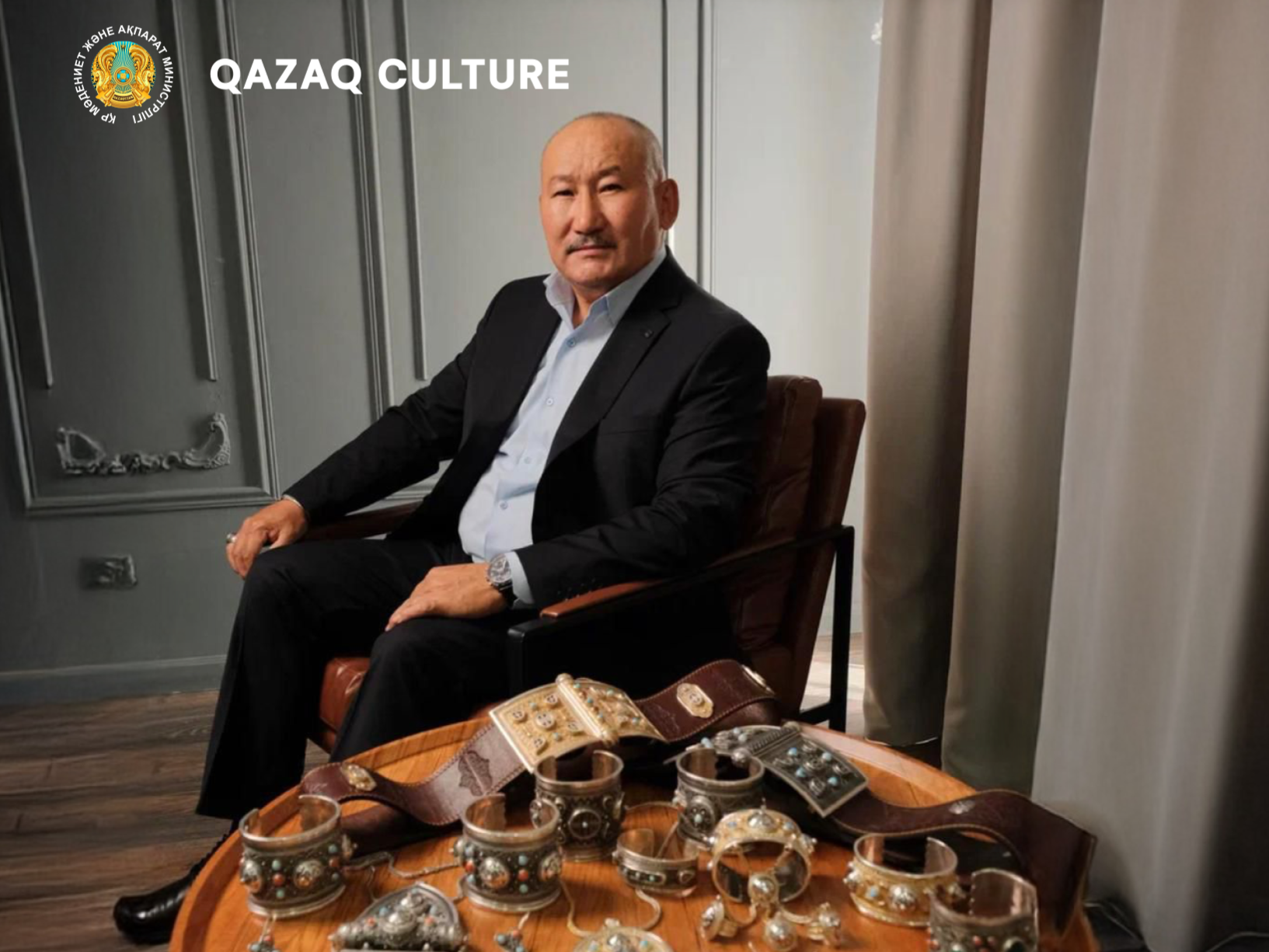
Jewelry is one of the most ancient branches of traditional culture, dating back to the nomadic era. Jewelry was created not only as decorative elements but also as a special language through which people conveyed their history, worldview, and spiritual values. In each piece, the artisan preserved cultural memory, artistic taste, and national identity. In this sense, the Kazakh jewelry tradition possesses a unique expressiveness: its patterns and symbols reflect the wisdom of generations and the philosophy of life of the steppe people.
Berik Alibay is one of these artisans who has dedicated over forty years to jewelry making. We visited his workshop to discuss the unique characteristics of this art and how the culture of wearing national jewelry is preserved today. In our conversation, the artisan shared the story of his professional development, spoke about the rare exhibits in his museum, and about his book "Zerger," which reveal the richness of the Kazakh artistic tradition and its continuity through the ages.
— How did you come to jewelry making? Is this a continuation of a family tradition or a personal choice?
– Certainly, family played a decisive role. My grandfather was a jeweler, and from an early age I spent time in his workshop, among tools and metal blanks. You could say I grew up in an atmosphere of craftsmanship. However, as a child, I dreamed of becoming an artist, not a jeweler. After finishing school, I enrolled in an art school in Almaty: first, I took a preparatory course, and then, when reapplying, I learned about the "artistic metalworking" program. The teachers noticed my abilities and recommended this specialization.
Perhaps those childhood memories – the smell of the workshop, the sight of my grandfather working – remained etched in my memory and influenced my choice. Since then, I've devoted myself entirely to jewelry making. I took it seriously at the age of twenty, and today I'm over sixty. My life has been connected with this craft for almost four decades. During this time, I've become increasingly aware of the nobility of Kazakh jewelry art, its sophistication and meaningful depth.
– What are the distinctive features of Kazakh jewelry art?
I can confidently and proudly say that among global examples of decorative and applied art, the Kazakh jewelry tradition occupies a leading position – in terms of artistic expressiveness, the richness of its ornamentation, and the depth of its symbolism. I have participated in many artisan exhibitions and festivals around the world. We almost always return with awards – Kazakh art invariably attracts interest and recognition.
The secret lies in its uniqueness. Behind each pattern lies the history, worldview, and spiritual experience of the people. When you explain the meaning of the ornaments, viewers begin to perceive the pieces differently – with respect and sincere admiration for the cultural heritage of our people. Through jewelry, we have been able to declare ourselves to the world – and I am sure we will continue to do so.
What needs to be done today, in the age of globalization, to preserve the culture of wearing national jewelry?
The world is open today: social media allows us to see and copy jewelry from any country. Our artisans sometimes also look to foreign examples, simply based on personal taste. However, in my opinion, this carries the risk of gradually losing our own cultural identity. After all, the jewelry of every nation is a reflection of its history and value system. For example, the traditional shekelik (shekelik) is worn at the temples and paired with a saukele or skullcap. However, Kazakh girls never wore metal jewelry on their foreheads. Metal and silver were considered "cold" materials, and our ancestors took their impact on health into account, striving for harmony with nature.
Every piece of jewelry has its place, purpose, and meaning. Before using traditional jewelry, it's important to understand its history and the traditions of wearing it. We mustn't dilute our own cultural foundation. The Kazakh girl's culture of wearing jewelry must be preserved as part of the national code.
Culture is a heritage passed down from generation to generation. We should rely on the example of mothers and grandmothers and cherish traditions. True modernity lies not in abandoning our own heritage, but in the ability to appreciate it and adapt it to the present day. In the past, when a daughter was given in marriage, a family would invest their best in her dowry: saukele, hair ornaments (sholpy and shashbau), and even horse harnesses were richly decorated. The girl was sent off with honor and dignity. If we can preserve the meaning of these traditions and harmoniously integrate them into modern life, we will preserve both our national identity and the culture of wearing jewelry.
– Jewelry making requires patience and perseverance. How long does it take, on average, to create one piece?
– If you prepare the stone yourself and do all the work yourself from start to finish, the process can take up to a year. When you buy pre-cut stones, the work, of course, goes faster. I cut some local stones myself—it's quite a labor-intensive process. And I prefer to buy especially hard and difficult-to-cut materials ready-made.
Therefore, the timeframes always vary. One ring can be made in a day, another in an hour, and a third can take an entire year to complete. Everything depends not only on technique but also on the master's inner state—his mood and inspiration. This is why handcraft is so highly valued throughout the world. The master invests their strength, energy, and inner resources into the piece. And the person who subsequently wears this jewelry feels this warm, living energy. Therefore, handmade pieces always have special value.
– How did the idea for the book "Zerger" come about? What is its main goal?
– This book is the culmination of my forty-year journey in jewelry making. It reflects everything: from childhood memories and my first steps in the craft to my professional development and creative achievements. In a sense, it is my autobiography. But more than just memories, it is a unique chronicle of a life inextricably linked with jewelry making.
The book features archival photographs and information about works created over the years. Of course, not all early pieces were preserved—many were sold, and photographs from those years have not fully survived. Therefore, the main emphasis is on works from recent years, collected in a kind of photo album. On the one hand, this is a creative catalog, and on the other, it's a reflection of my small private museum. Over the years, I've assembled various collections, including some rare pieces.
I believe this book will be of interest to readers because it captures not only my personal story but also the spirit of Kazakh jewelry art, its traditions, and continuity.
The main goal of this publication is not only to present my own work but also to share the richness of Kazakh culture. I've addressed the book to young people and donated it to libraries. I hope that after reading it, someone will become interested in jewelry art and be inspired to pursue this path.
– What other valuable and rare exhibits are on display in your museum? Tell us more about their features and history.
– This is a collection dedicated to men's attire. It includes a kemer-belbeu, an asatayak, a mace, a dagger, a knife, and an aibalta. The distinctive feature of these objects lies in their rich decorative design: they are inlaid with precious stones—diamonds, emeralds, and sapphires—and crafted from gilded silver.
The asatayak is more than just a symbolic staff. It opens like a box, revealing a map of Kazakhstan with the location of the Golden Man's discovery marked inside. This image is one of the country's national symbols, and therefore the composition carries special meaning. In the past, when khans ascended the throne, they held the asatayak in their hand while taking the oath of office—a symbol of authority and responsibility.
The kemer-belbeu also held a special place in culture. It was not simply an item of clothing, but a revered and prestigious object. It is no wonder that people desired a person to be strong and resilient. The belt was perceived as more than just a piece of clothing—it imparted posture, composure, and inner discipline. A person with a belted waist looked fit, confident, and firmly on their feet. In traditional culture, every object had a practical purpose and, at the same time, carried deep meaning.