From dombra to modern composition: how Shabyt is organized after 29 competitions
To qualify for the Shabyt International Competition, a young dombra player must record two kyuis – one in the tökpe tradition, the other in the shertpe tradition. Both pieces must be performed in a single video, without editing. The recording is uploaded to YouTube and sent to the organizers.
This short fragment of the competition regulations interestingly combines two completely different eras. A musical tradition, passed down from performer to performer for centuries, is now being professionally evaluated via a digital platform.
In 1998, when Shabyt first took place in Astana, such a method of participation was unimaginable. Over the past nearly three decades, the methods of music distribution, the professional environment, and the opportunities for young artists have changed. However, the competition itself has remained intact, gradually adapting to new conditions.
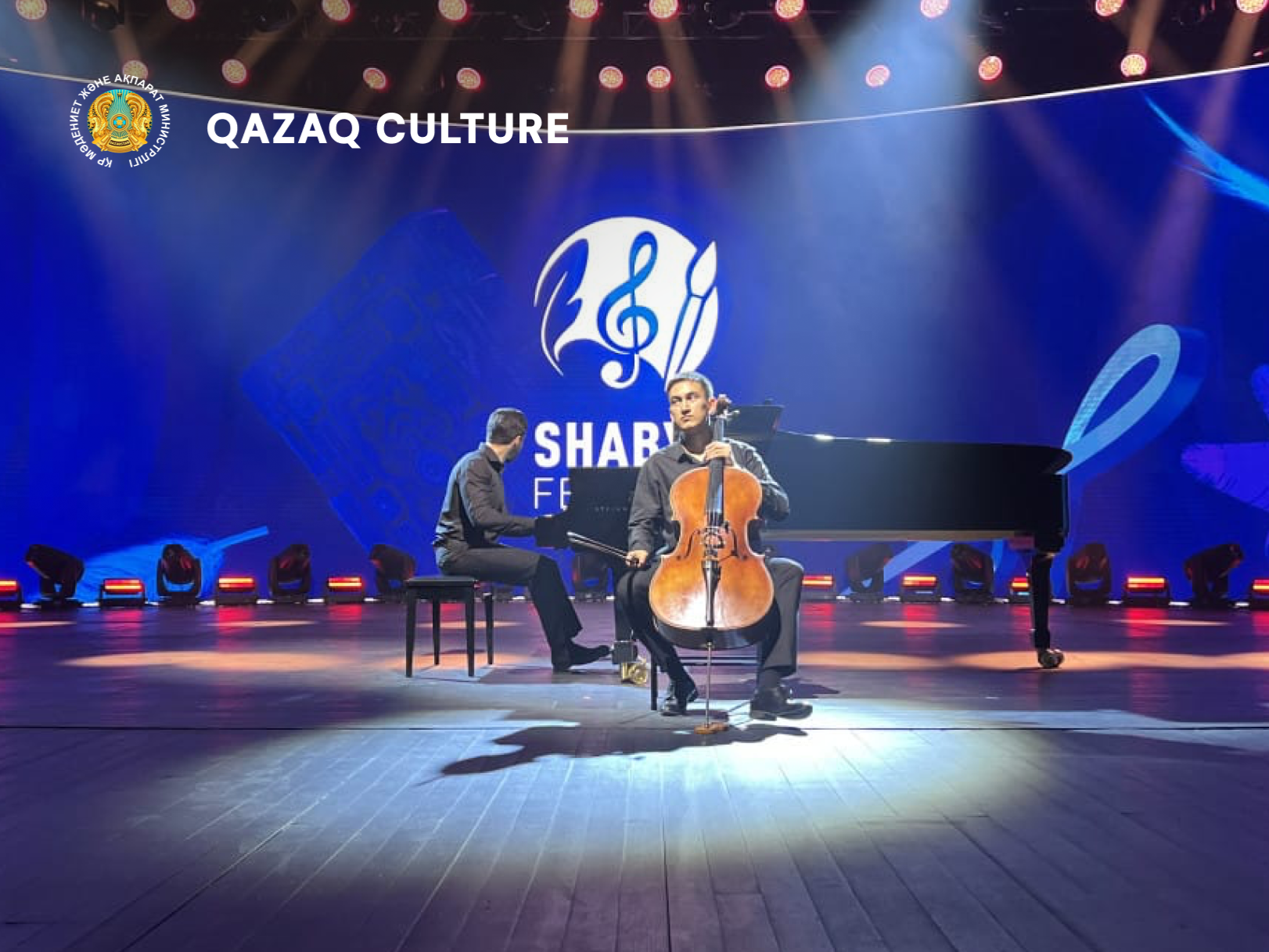
From November 30 to December 4, the capital will host the 29th International Competition of Creative Youth "Shabyt." Its program offers a glimpse into the coexistence of traditional performance, academic music, original composition, and contemporary artistic practices.
What does it mean to master a tradition?
The "Dombyra" category is particularly well-structured. Here, demonstrating technical virtuosity or presenting a single, spectacular concert number is not enough. The competition program provides an introduction to the various performance traditions of Kazakhstan.
Tökpe and shertpe differ in the nature of musical movement, sound production techniques, melody development, and expressiveness. Mastery of both traditions requires a musician's ability to work with diverse layers of national instrumental culture.
The mandatory program includes works by Kurmangazy, Dina Nurpeisova, Tattimbet, and Sugir, kyuis by Kazangap, and works from the Mangistau school of performance. One round includes a focus on the work of a contemporary kyui composer.
Thus, the competition evaluates not only the ability to reproduce musical heritage but also an understanding of its inherent diversity. The national performance tradition is not presented as a single style, but as a collection of schools, each with its own artistic language.
A similar principle applies to the traditional singing category. Participants represent their own performing school, drawing on folk songs, the works of Abai, Kenen Azerbayev, and Manarbek Yerzhanov, as well as the music of contemporary Kazakhstani composers.
For young performers, this is an opportunity to demonstrate not only their vocal abilities but also their knowledge of the cultural environment in which the song tradition developed.
Between Academic School and Original Art
The woodwind, brass, and percussion categories represent another side of professional training. Here, young musicians work within an academic performance culture oriented toward international repertoire and professional standards.
Dombira and flute players, performers of traditional songs, and trumpet, French horn, and percussion players all share the same competition program. Such a juxtaposition is entirely natural for Kazakhstan's cultural landscape. The National Music School has long been developing at the intersection of its own heritage and global academic traditions.
But "Shabyt" is not limited to performing arts. In the fine arts category, sculpture and decorative and applied arts will be represented in 2026. Participants can work with textiles, jewelry, wood carving, batik, embroidery, and art objects.
Thus, craft techniques are included in a professional art competition alongside sculpture and original objects. This is especially significant for contemporary Kazakhstani art: traditional materials are increasingly becoming the basis for independent design or artistic expression.
Creativity in the Age of Artificial Intelligence
Of particular interest is the special category "Composition," in which participants are asked to create an original song about Astana in Kazakh or Russian.
The competition regulations stipulate several requirements specific to the modern music industry. If a work is created by multiple authors, the participant must have the appropriate consent from the co-authors or an agreement regulating the public performance, recording, and distribution of the material online.
Furthermore, the use of artificial intelligence in creating the arrangement or soundtrack is prohibited in this category.
Just a few years ago, such a clause in the competition regulations would hardly have been necessary. Today, organizers must clearly define which elements of a work must be the result of human creativity, and also take into account the rights of authors in the subsequent digital distribution of music.
It turns out that a professional competition no longer evaluates only the artistic result. A modern author must understand how a work is created, who owns the rights to it, and how it will exist after its first public performance.
Why does a young artist need a competition?
The first "Shabyt" competition took place in 1998, when Astana was just beginning to develop its own cultural infrastructure. The creation of a large creative platform was part of the new capital's emergence as a center for professional art.
Today, the conditions have changed significantly. Musicians can independently publish recordings, participate in international projects, and introduce their work to audiences through social media. Artists also have significantly more ways to present their work without waiting for an invitation to a gallery. However, digital publicity does not eliminate the need for professional recognition. The competition offers a different framework: a direct comparison of performing schools, evaluation by a specialized jury, work under specified conditions, and the opportunity to meet colleagues from different countries.
In 2025, "Shabyt" brought together over 800 participants from Kazakhstan and abroad. The international jury included specialists from China, Russia, Turkey, Italy, Kyrgyzstan, and Uzbekistan. In addition to the competition, the program included master classes and creative workshops.
In 2026, young professionals aged 18 to 35 are eligible to participate in the competition. The Grand Prix is 3 million tenge. Preliminary stages of several nominations are held remotely, while the main competition rounds involve in-person encounters between the performer and their work and the professional community.
Nearly three decades later, "Shabyt" retains its significance precisely at the intersection of these two processes. On the one hand, a young artist must be comfortable navigating the contemporary cultural environment. On the other hand, mastering the craft at a level that can't be measured solely by views or subscribers.
And perhaps this is best expressed by the requirement placed on young dombra players: using a modern digital platform, but performing two traditional kuis without editing, from start to finish.
Technology is changing the way art is presented. Mastery still has to be proven on one's own.