Home with Music: What will the concert be like for students from the world's leading conservatories?
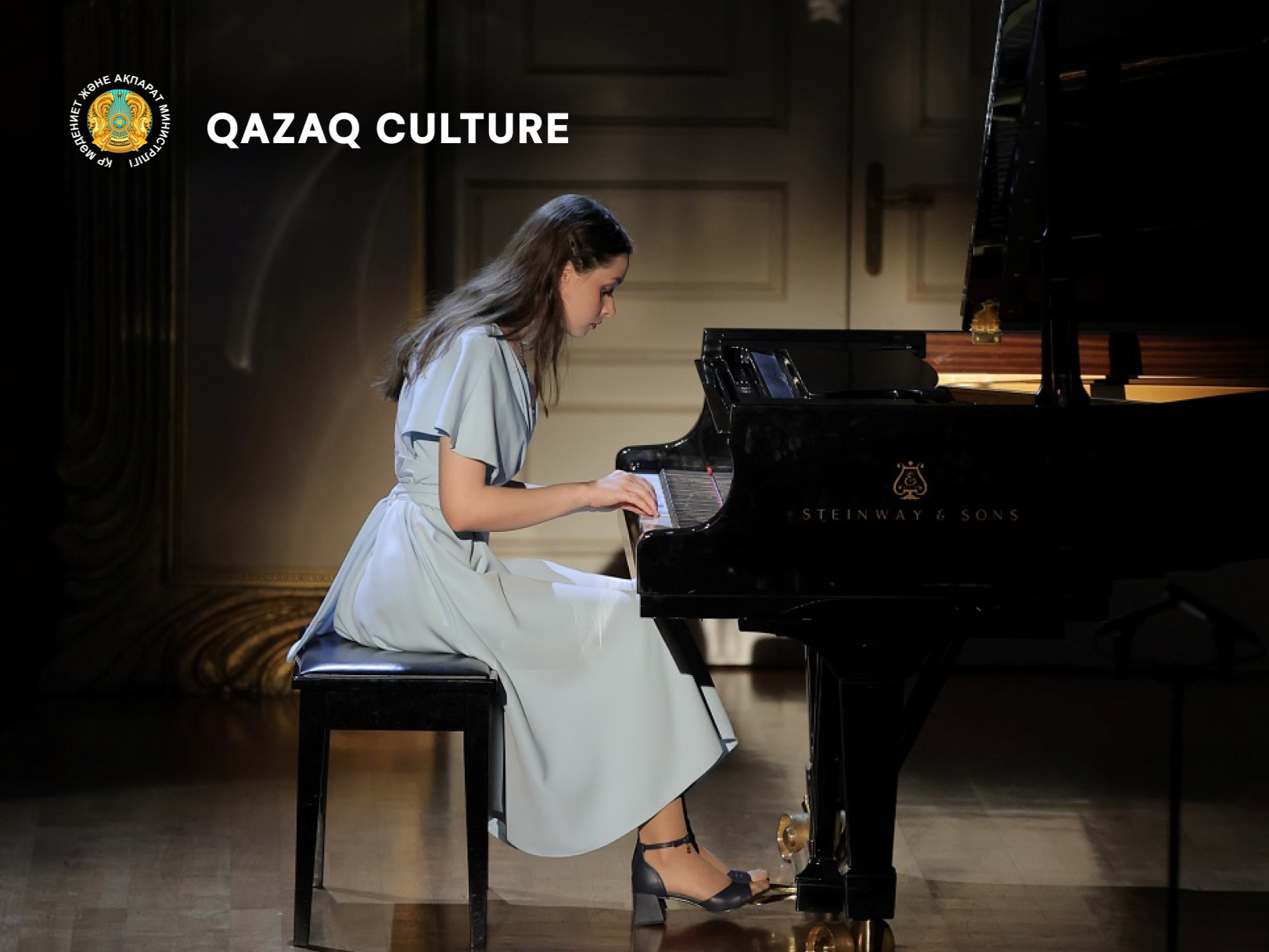
For a musician, vacation rarely means complete silence. Even away from the classroom, there are still daily lessons, new compositions, and the need to stay in shape. And returning home often becomes another test – not before teachers, but before their home audiences.
Nine young Kazakhstani musicians studying in St. Petersburg, Moscow, and Vienna will meet at the Kulyash Baiseitova Chamber Hall. The concert "Musical Vacation" will be a unique story about what they learned away from home, how their performance thinking has changed, and the music they choose today.
Voice, violins, flutes, piano, classical guitar, and dombra will all share the stage. Alongside works by Mozart, Brahms, Chopin, and Rachmaninoff, there will be music by Kurmangazy and works by a young Kazakhstani composer. This juxtaposition transforms the program into more than just a series of solo numbers, but a meeting of different eras, schools, and musical languages. Nine Stories of One Generation
The concert participants are united by more than just their age. Each has already experienced international competitions and trained in an environment where young artists are required not only to have impeccable technique but also to interpret music in their own unique way.
The concert will feature soprano Marta Nabatova, violinists Dariga Kazkenova and Adela Duisenbay, flutists Afina Mavidi and Kamilya Ismagulova, pianists Maria Shavtelskaya and Radiya Orazalinova, guitarist Aidar Bizhanov, and composer Alibi Zhanat.
Their performances can be seen as nine distinct musical portraits. However, the program is structured so that these stories complement each other – from national music and romantic classics to operatic drama and contemporary works.
The evening will open with Maria Shavtelskaya. She will perform Nurgisa Mendygaliev's "The Legend of the Dombra," followed by Kurmangazy's "Adai," a virtuoso arrangement by Abdulakhat Zhaiym. From the very first minutes of the concert, the dombra will be present in the hall even when the piano is on stage: its character, rhythm, and steppe energy will be conveyed by another instrument.
Radiya Orazalinova will explore a completely different world. Her program will combine Sergei Prokofiev's First Piano Sonata, Sergei Rachmaninoff's Sixth Prelude, and Frédéric Chopin's First Scherzo. This is music in which technical complexity is inseparable from internal tension. Here, the pianist is not simply playing all the notes; he must capture the drama, mood, and scale of each piece.
From the opera stage to the Spanish guitar
Soprano Marta Nabatova will appear before the audience in two contrasting images. She will perform Nedda's recitative and ballad from Ruggero Leoncavallo's opera "Pagliacci," as well as Elvira's aria from Wolfgang Amadeus Mozart's "Don Giovanni."
In a short segment of the concert, the singer will transition from the passion of Italian opera to the precise and graceful dramaturgy of Mozart. This combination allows one to appreciate not only the range of her voice but also the young artist's ability to change the emotional nature of her performance.
Violinists Adela Duisenbay and Dariga Kazkenova will continue this unique dialogue between the two traditions. Adela will perform Camille Saint-Saëns's "Havanaise," a work that blends French refinement with Spanish temperament. Dariga will turn to Johannes Brahms's grand Violin Concerto, presenting its second and third movements. While Saint-Saëns' violin seduces with its lightness, brilliance, and fluid rhythms, Brahms's is deeper and more austere. In a single concert, these works will demonstrate how diverse the character of a single instrument can be.
After the dense violin sound, the program will include music for the flute. Kamilya Ismagulova will perform Gabriel Fauré's Fantasy, built on subtle transitions between lyricism and virtuosity. Athena Mavidi will present François Born's "Brilliant Fantasy on Themes from the Opera 'Carmen'"—a work in which Bizet's familiar melodies become a true challenge for the performer.
The classical guitar will be a special voice of the evening. Aidar Bizhanov will perform Francisco Tárrega's "Capriccio Árabesque" and Roland Dyens's "Fuoco." In these two works, the instrument reveals itself in different ways: first intimately and melodious, then swiftly, rhythmically, and almost orchestrally. A Composer Among Performers
Alibi Zhanat holds a special place in the program. This evening, he will be not only a performer but also a composer. Three of his compositions will be premiered before a Kazakhstani audience.
In "Variations for Dombra and Piano," Alibi himself will perform the dombra part, with Maria Shavtelskaya at the piano. The program also includes "Song Without Words" for piano and the romance "Sezim Syry" for soprano and piano, which will be performed by Marta Nabatova.
These works vary in genre and composition, but in each, the composer combines musical worlds close to his heart—romantic lyricism, folk intonations, and the language of contemporary classical music.
"For the concert, I have prepared three original works, each of which reveals a distinct facet of my musical language. They will be performed for the first time by a Kazakhstani audience, so this evening can be called their Kazakhstani premiere," explains Alibi Zhanat. It's also important for the young composer that the premiere will take place not as part of a separate composer's evening, but among performances by his friends and colleagues.
"Musical Vacation" gives us the opportunity to meet again on the same stage, exchange creative energy, and create an atmosphere of lively communication with the audience. Such evenings unite performers and audiences with a shared love of music," the composer notes.
Return as a New Starting Point
The title "Musical Vacation" evokes the lightness of summer, but behind each performance lie years of study, competitive auditions, work with teachers, and life away from home. Therefore, the concert becomes not so much a break between academic semesters as an opportunity to reconnect with one's creative path on the stage of one's home.
The audience will hear more than just students from renowned conservatories returning home for the holidays. Young artists who are gradually finding their own voice will take the stage. Some are rethinking European classics, others are returning to national music, and still others are already creating works that are yet to find their place in the contemporary repertoire.
Perhaps this is what a true musical vacation should look like: not a pause, but a return—to friends, to listeners, and to the music that marks the beginning of a new era.