The Brush That Bridged the Eras
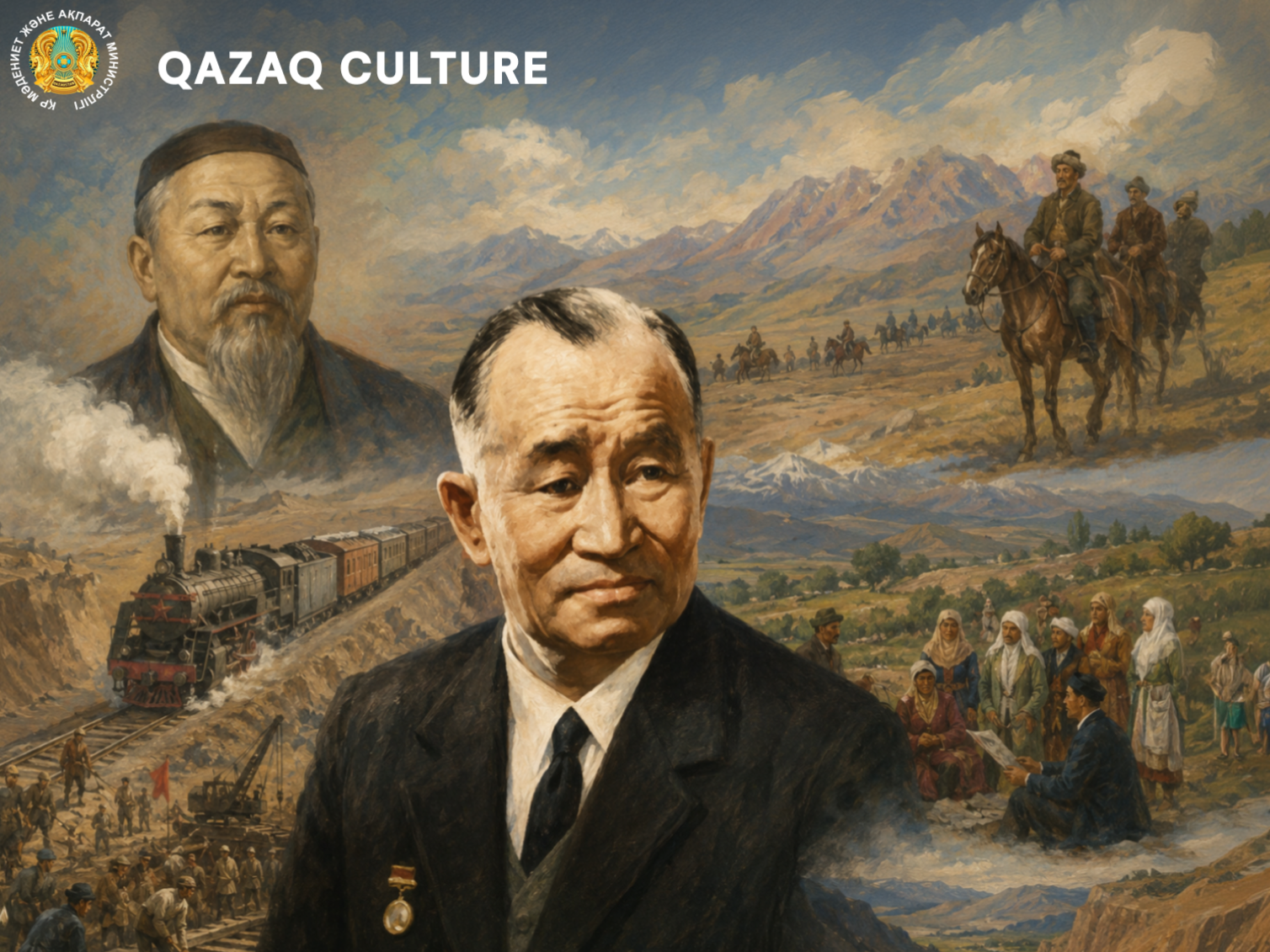
The history of Kazakhstan has known many outstanding figures in the visual arts whose work played an important role in shaping national identity, culture, and the country’s visual heritage. Among them, Abilkhan Kasteyev holds a special place.
He is a figure of true national significance, whose contribution to the culture of Kazakhstan extends far beyond the work of a single artist. Kasteyev is rightly regarded as the founder of Kazakh national painting.
The great painter left behind more than two thousand works of art, many of which have become invaluable historical records of their time. He captured the transformation of the Kazakh people from a traditional nomadic way of life to a settled society, the country’s industrialization, the construction of the Turkestan–Siberia Railway, ambitious building projects, and portraits of his contemporaries. Without his art, many details of the everyday life, clothing, customs, and traditions of the steppe people in the first half of the twentieth century might have been lost to history.
Born into a humble Kazakh family, Kasteyev helped his parents tend livestock from an early age and grew up immersed in the traditions of the Kazakh people. From childhood, he was surrounded by the beauty of nature, absorbing the colors, shapes, landscapes, and subtle details of the world around him.
Although he received no formal artistic education in his early years, Kasteyev’s creative talent revealed itself at a very young age. He would draw patterns and ornaments on the walls of the yurt with pieces of charcoal and sometimes carve them into wooden objects.
The first real recognition of Abilkhan Kasteyev’s talent came in the late 1920s, when the young man, still unknown as an artist, went to work on the construction of the Turkestan–Siberia Railway. While working on the project, he often sketched his fellow workers and scenes from their daily lives. His unusual talent soon attracted the attention of both his colleagues and the project’s management.
In 1929, Kasteyev arrived in Alma-Ata, where he enrolled in an art studio headed by the distinguished painter and ethnographer Nikolai Gavrilovich Khlyudov. Khlyudov became Kasteyev’s principal mentor, teaching him the fundamentals of academic art, helping him master the use of color, and instilling in him an appreciation for observing and working from life.
Later, from 1934 to 1937, with the support of Temirbek Zhurgenov, Kasteyev continued his studies in Moscow at the N. K. Krupskaya Art Studio.
Thanks to his prolific artistic career and the authority he earned through his work, Abilkhan Kasteyev headed the Union of Artists of Kazakhstan in the 1950s.
The extraordinary scope of his work is reflected in the fact that over the course of his career he created more than two thousand paintings and graphic works. Among his best-known pieces are Portrait of Abai, The Construction of the Turkestan–Siberia Railway, The Talas Valley, Kokpar at the Collective Farm, The Medeu High-Mountain Skating Rink, Morning on the Jailau, Kaskelen Gorge, and many others.
The significance of Kasteyev’s art is difficult to overstate. He succeeded in organically combining the principles of classical academic painting with a profound, deeply personal understanding of Kazakh mentality, the vastness of the steppe, and the beauty of its natural landscape.
With ethnographic precision and poetic sensitivity, the artist portrayed the everyday life, traditions, labor, and celebrations of the Kazakh people during a period of sweeping historical change.
Alongside the traditional way of life, he documented the country’s industrialization, the construction of the Turkestan–Siberia Railway, and the emergence of new cities, capturing Kazakhstan’s transition into a new era.
His art also created an entire gallery of portraits of his contemporaries and prominent historical figures. The portraits of Abai painted by Kasteyev played a significant role in shaping the visual image of the great poet for generations of Kazakhstanis to come.
Through his own example, he paved the way for an entire generation of future Kazakhstani artists, proving that national culture could express itself through the language of great visual art.
The legacy of Abilkhan Kasteyev is more than a cornerstone of classical Kazakh painting. It is a genuine chronicle of the Kazakh soul, elevated to the level of high art. Having journeyed from a humble shepherd to the founder of a national artistic tradition, he preserved on canvas the spirit of a disappearing nomadic civilization while documenting the birth of a new world.
Each of the master’s works serves as a living thread connecting eras, traditions, and people.
His legacy will forever remain a reliable compass for future generations—a testament to how sincere love for one’s homeland can immortalize an entire people, their culture, and their aspirations.