The legacy of zhyrau – the voice of conscience and wisdom
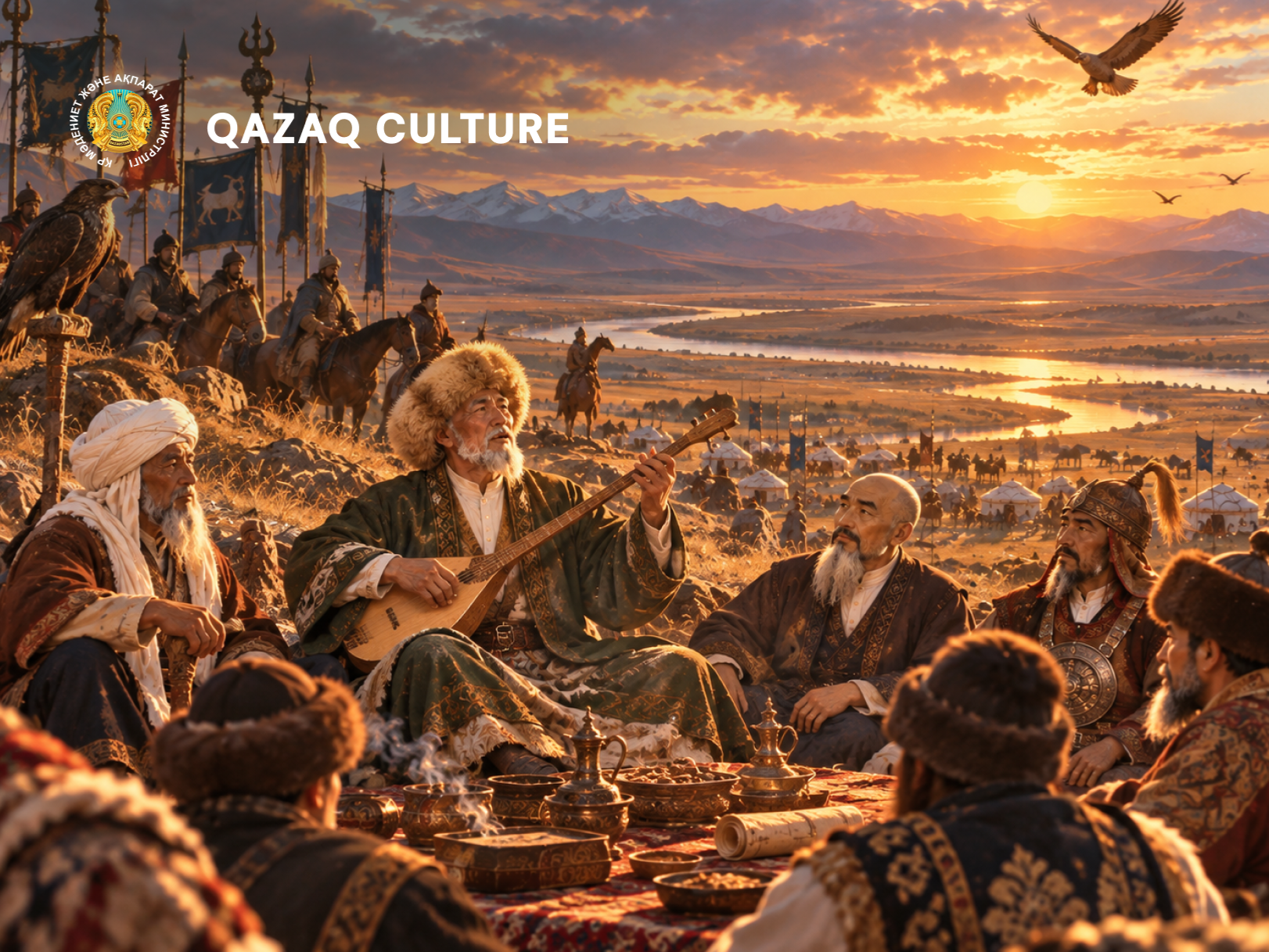
The vast steppe of Eurasia is a space imbued with the heroism and legacy of many generations. In nomadic life, the survival of the community depended on unity, mutual assistance, and the strength of each individual. This lifestyle shaped the unwritten yet firmly upheld moral code of the steppe—the law of conscience (ar zany).
For centuries, jhyraus (poet-improvisers) and poets passed down these principles, embedding them in the public consciousness. Their words not only offered wisdom but also provided guidance in times of hardship. In the era of globalization and digital technology, what does this heritage teach us?
The Spiritual Pillar of Steppe Life
The worldview of the jhyraus and poets drew its nourishment from nomadic life itself. Therefore, their reflections have not lost their significance today.
Conscience and honor are the measure of humanity. Losing one's reputation before the people was considered a severe trial for a man. In the tolgaus (poetic reflections) of the warrior-poet Kaztugan, loyalty to the native land, heroism, and nobility are exalted. Preserving one's conscience means being honest both with oneself and with others.
Unity is the core of statehood and nationhood. Jhyraus deeply understood that discord would lead to the weakening of the people. Asan Kaigy searched for Zheruyik (the promised land), wishing his people a comfortable settlement and a peaceful life. Dospambet and Shalkiiz sang of defending the native land and upholding national dignity. Their verses echo the heartbeat of those deeply concerned for the fate of their people.
Justice is responsibility before the people. Jhyraus advised rulers and expressed their thoughts openly when necessary. Bukhar-jhyraus advised Ablai Khan on maintaining national unity and caring for the people. His poetry reminds us that leaders must never forget their duty to the public.
In Kazakh society, poetry and eloquent speech were never regarded as mere entertainment. In the national mindset, the word of a jhyraus carried exceptional weight: it gave courage to warriors, reconciled relatives, and raised the spirits of the people in difficult times. Poets also cherished values that transcend daily trivialities—love for the ancestral homeland, respect for the elders, care for the youth, and hospitality.
The legacy of the jhyraus still makes people think today. Though times change, the value of keeping one's word, knowing one's roots, and bearing responsibility for those around us remains unchanged. Listening to the sound of the dombra and turning our attention to ancient poetry allows us not only to understand the dreams and ideals of that era, but also to gain a deeper understanding of our own identity.