"QOBYZ SOUL – DASTUR" – a musical treasure of the Turkic world
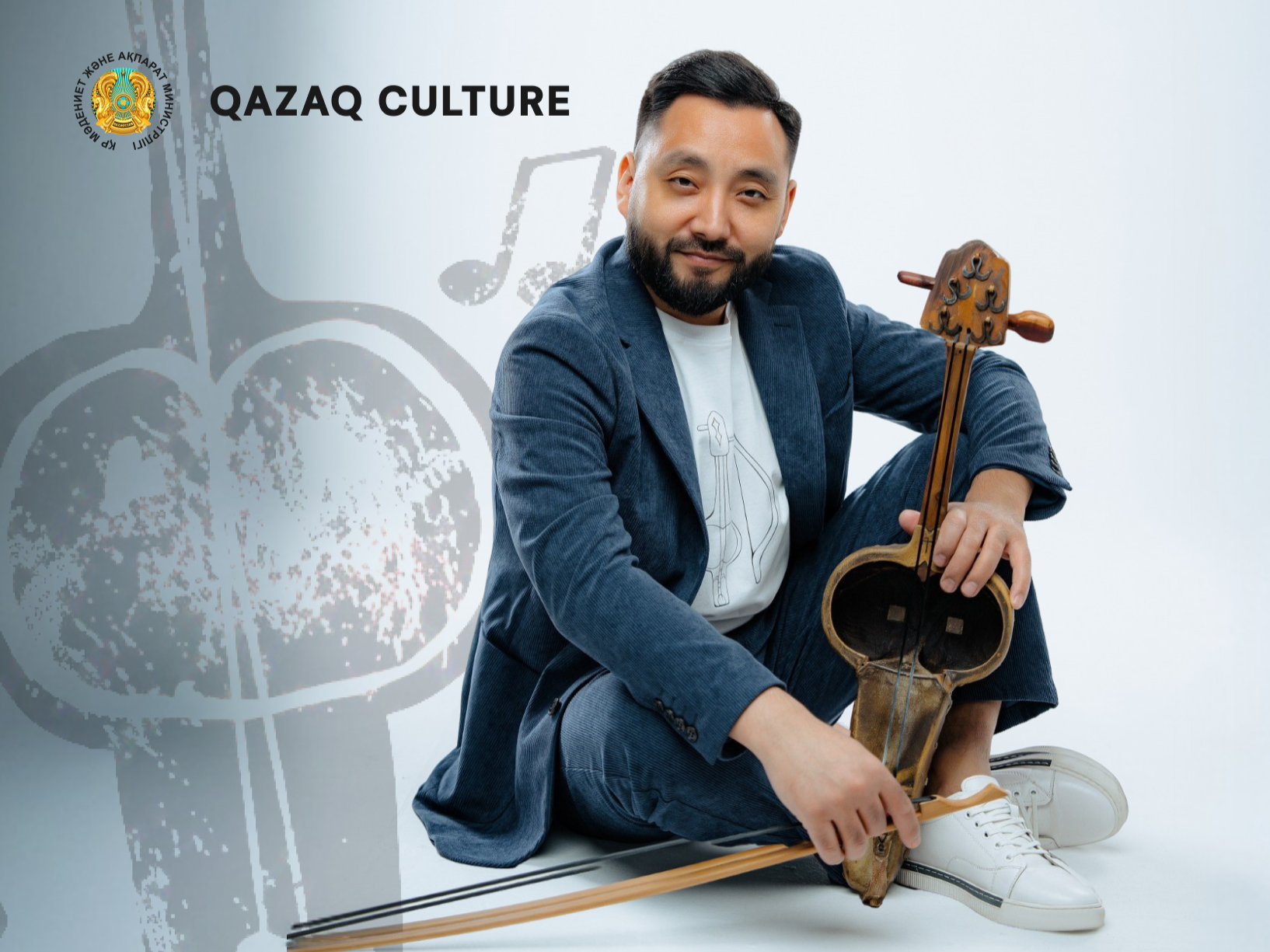
The kobyz is a unique instrument, an important part of the musical and spiritual heritage not only of the Kazakh people but also of the entire Turkic world. Having come down to us through the centuries, this valuable instrument preserves national memory, worldview, and musical culture. Today, the kobyz is studied not only for its traditional performance aspects but also from a scientific research perspective, revealing new facets and possibilities.
In this context, we interviewed renowned kobyz player, PhD, teacher, and soloist of the State Academic Concert Organization "Kazakh Concert," Maksat Medeubek. He is leading the "QOBYZ SOUL – DASTUR" project, which aims to popularize the kobyz not only as a national heritage of Kazakhstan but also as an ancient instrument common to the entire Turkic world.
This project represents a unique blend of tradition and modernity. The concert features ancient melodies and presents the history of the kobyz, its various forms, and performance techniques across different cultures. Our interview discussed the past and present of the kobyz, the ideas and goals of the "QOBYZ SOUL" project, and the intersection of art and science.
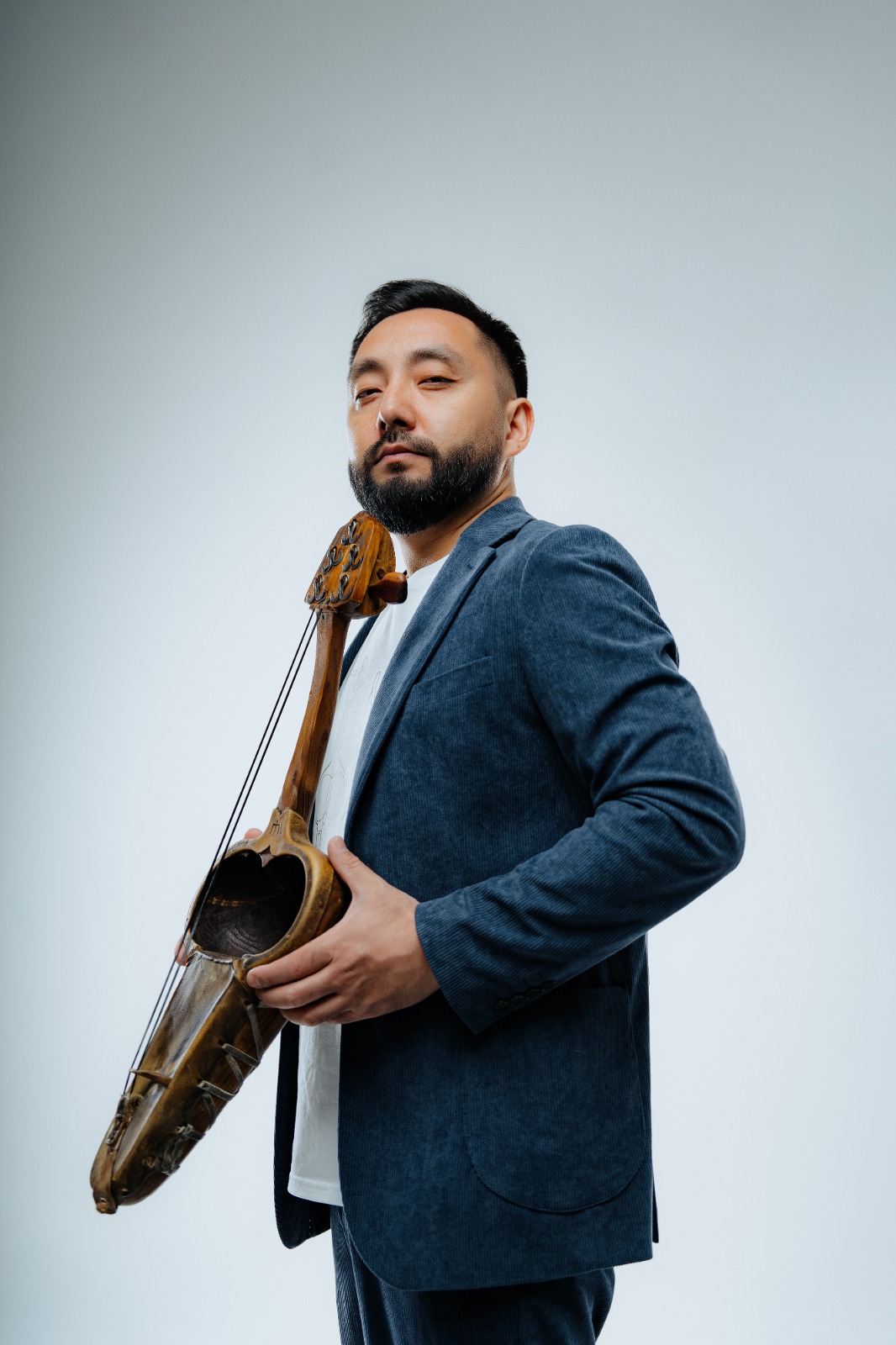
— What is the idea behind the "QOBYZ SOUL – DASTUR" project?
— The kobyz is not an instrument exclusively of the Kazakh people, but rather an ancient musical heritage of the entire Turkic world. The Kyrgyz call it "qyl qiyaq." Similar instruments were also used by the Tatars, Nogais, Bashkirs, and Crimean Tatars. The names may differ slightly, but the playing methods and basic performance techniques are similar.
The "QOBYZ SOUL – DASTUR" concert is unique in this regard. Usually, when people talk about the kobyz, they think of traditional kuis or sometimes modern cover versions. The main idea of this project is to present the kobyz not only as a Kazakh instrument, but also as an instrument common to the entire Turkic world. The concert clearly demonstrates the performance styles of different peoples. For example, in the Kazakh tradition, the strings are pressed with the nails, while in other cultures, the strings are plucked from above, similar to playing the dombra. Furthermore, the shape of the kuy, the melodic structure, and the performance technique of each culture have their own distinctive features. This concert will also feature kuys and unique materials discovered during our doctoral dissertation and scientific research.
– The rich history of the kobyz, its origins, and artistic qualities are often discussed. How do you convey this to the audience on stage, not as a lecture, but through the language of music?
– The concert program features melodies dating back to ancient times. Furthermore, kobyz kuys from the traditions of several Turkic peoples, particularly the Tatar and Uzbek, will be performed for the first time. Previously, these works were preserved only as sheet music in books and scholarly works. Some of these, especially the Tatar kuis, were valuable artifacts preserved in the archives of Tatarstan. We re-examined these ancient recordings, notated them, and adapted them to the specifics of the kobyz, presenting them to listeners today in a refreshed form. Thus, melodies preserved through the centuries are revived and resound on the concert stage with their warm, vibrant voice.
– The "QOBYZ SOUL – DASTUR" project is often called a space where tradition and modernity meet. How do you define innovation in this project?
– We can reveal the rich history of the kobyz by demonstrating its versatility and diversity of forms. By bringing instruments of Turkic peoples to the stage, explaining their performance characteristics, and performing kuis in the styles of different countries, we vividly demonstrate to the audience the broad scope of the kobyz art.
A special episode of the concert program will be "kobyzdar sherui." This small show will feature performers from the "Gulder" ensemble. The musical heritage of the Turkic peoples will be presented to the audience. The kobyz and related instruments from various nations will be presented as a kind of "living museum." The most elegant and impressive examples of the Kazakh kobyz will also be widely displayed.
Today, the art of playing the kobyz in Kazakhstan is developing particularly rapidly, and the number of artisans crafting these instruments has increased significantly. Each artisan creates the kobyz in their own style, with their own unique approach, giving the art a new dimension. The best works of these artisans will be presented to the public during the concert.
One of the most valuable exhibits of the "kobyz show" will be an ancient kobyz of an unknown origin (baqsy) from the village of Jansugir in the Zhetysu region. This sacred instrument will also be on display to the general public. The concert features no arrangements—all pieces are performed in their pure traditional form, using ancient kuys and in their original style. Thus, tradition and innovation are seamlessly combined, and the ancient sound of the kobyz finds its way to modern audiences in a refreshed format.
— How did your teaching experience contribute to the development of this concert's program?
— I am currently a senior lecturer and PhD candidate at the Kulyash Baiseitova Kazakh National University of Arts in Astana. I am also a soloist at the National Center for Folk Arts "Khalyk Kazynasy" under the Roza Baglanova State Academic Concert Organization "Kazakh Concert."
I believe that the foundation of my teaching and performing experience lies, first and foremost, in the selection of repertoire. Since childhood, we've learned from our mentors how to organize concerts, systematically construct a program, maintain stage etiquette, and present works in a way that makes a powerful impact on the audience. After all, the success of any concert depends primarily on the professional level of the chosen repertoire. As professionals, we don't simply perform kuis; we select complex works and present them with in-depth preparation.
Mastering the unique characteristics of other national instruments has significantly enriched our teaching experience. This has allowed us not only to improve our performance skills but also to take our research to a new level.
– Considering your scientific research and publications on the kobyz, how do you manage to combine research and performance?
– Maintaining a balance between performance and scholarship is natural for me. I devote attention to both. Even before entering doctoral studies, I was deeply interested in the design features of the Kazakh kobyz. Even a simple kobyz has a varied soundboard shape, a variety of external contours, and a rich and unique sound. It was these differences that led me to research and stimulated my scientific inquiry.
Over time, already in my doctoral studies, I expanded my research and began to delve deeper into the musical instruments of the Turkic peoples. This interest has not waned and, on the contrary, is growing.
In the future, I plan to systematize all this research from a scientific perspective and present it to a wider audience. Annually publishing articles, publications in international journals, and participation in international conferences are all integral parts of my professional development. This is extremely beneficial because research directly influences performance practice and fosters a new perspective on the repertoire. In my opinion, it is this interrelationship that ensures a balance between scholarship and performance.
The traditional musical instruments of the Kazakh people are an inexhaustible treasure. The research, revival, and widespread popularization of this heritage always remain my primary goal.
– What outcome would you like to see after the project's completion?
– We have been engaged in both art and science for over twenty years. During this time, we have researched and popularized the kobyz and traditional Kazakh musical instruments. The future of this sacred instrument is extremely important to us, and we have clearly defined goals.
Most people perceive the kobyz as a shamanic instrument, a ritual attribute, or simply an instrument for performing kuys. Sometimes you hear the opinion that it is "purely Kazakh," belonging only to us. Of course, this is pleasant, and we are grateful for it. The kobyz is truly a Kazakh national treasure. But we want to show that its roots are much deeper and that its history is closely connected to the Turkic worldview.
The goal of the "QOBYZ SOUL – DASTUR" project is to present a kuy concert in the format of a lecture-discussion. The repertoire is as diverse as possible, consisting of meaningful works. We hope that listeners will form a clear understanding of the kobyz, be inspired by the music, and want to explore this instrument further. If they can notice the common features and differences of the kobyz among different peoples, feel their melodies through music and receive true spiritual pleasure, this will be the highest result for us.