"Bulgary sadak, bukar zhay": How the martial art of the Great Steppe is being revived today
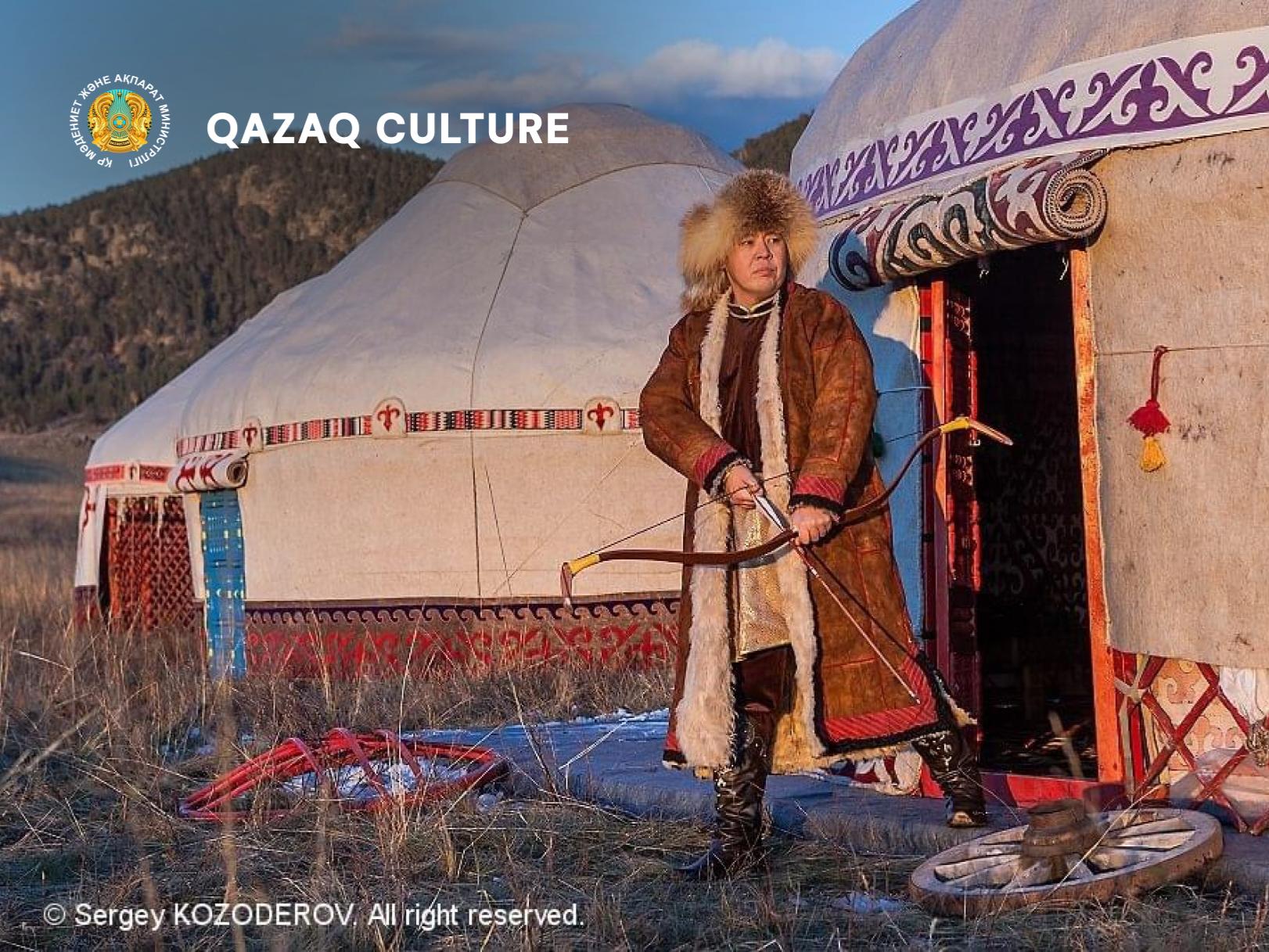
For modern man, the bow is, first and foremost, a sporting tool. For the steppe warrior, it was an extension of his arm, and the art of archery determined not only the outcome of a competition but sometimes the battle itself. Along with the weapon, an entire culture was formed—with its own masters, techniques, terminology, and traditions, traces of which have been preserved in epics and poetry.
Today, this heritage is returning in a new form. Traditional archery competitions are held in Kazakhstan, reenactors are restoring historical weapons, and masters are revisiting the technologies used by their predecessors centuries ago.
One of those who has been practicing this for many years is master reenactor and expert in traditional archery, Murat Gabdusalimov. In an interview with Qazaq Culture, he explained why the familiar word "sadaq" historically meant something completely different from what we are accustomed to calling it, how the steppe warrior's weapons were created, and why ancient martial arts are now becoming part of modern national culture.
Your team recently returned from the Madi Bapiuly Kazakhstan Cup with four gold medals. How tough was the competition?
It's truly the result of a lot of work. More than 200 of the country's top archers from 16 regions and three cities gathered in Karaganda. My son-in-law, Abdulla Duisen, competed in all four disciplines and won gold in all.
The competition was challenging. The Mergens had to shoot at four types of targets from different distances: "puta" (70 and 60 meters), "kalkan" (50 meters), "Orta Asia" (40 meters), and "zhamby" (30 meters).
But for me, something else is especially important. Tournaments like these show that traditional archery is no longer a hobby for a small circle of enthusiasts. A strong competitive environment is emerging, new athletes are emerging, and skills are improving.
How does traditional archery differ from traditional sport archery?
First of all, it has a completely different philosophy. Modern bows use sights, stabilizers, and other devices. In traditional archery, the archer relies heavily on their own sense of distance, technique, and experience.
But it's not just about hitting the target. This art is rooted in historical tradition. The Kazakhs, Turks, Mongols, and Japanese all developed their own schools of archery. Even a competitor's appearance in national dress is not just a cosmetic detail, but a sign of respect for the culture they represent.
Shooting also develops character. It requires concentration, breathing control, and calm. You can't let emotions dictate your movements when you release the arrow.
And, of course, it's serious physical work: the back, shoulder, and arm muscles are engaged, and coordination develops.
How deeply does the tradition of archery go back into the history of Kazakhstan?
Very deeply. Archaeological finds in Kazakhstan show that bows and arrows have accompanied the warrior culture of the steppe since ancient times. They are found in monuments dating back to the Saka, Wusun, and Kanju periods. Later, mounted archers played a significant role in the warfare of the Huns, the Turkic Khaganate, and the Kazakh Khanate.
Furthermore, archery was not only a military skill. Competitions such as "zhamby atu" and "altyn kabaq" became part of major festivals and public gatherings.
The technology itself is also interesting. Compound bows were made from wood, horn, bone, and sinew, joining the materials together in a special way. The work could be very time-consuming—the blanks had to be properly prepared and dried.
Today, we are trying to bring this tradition back into modern life. In our workshops, historical forms are reconstructed using both natural and modern materials. And the former military training gradually evolved into a sporting discipline. In 2022, traditional archery received official status as a national sport in Kazakhstan.
— Have you noticed that today we don't always correctly name traditional weaponry? For example, aren't "sadaq" and "zhai" the same thing?
— Yes, and this is a very interesting part of our weapons culture. What many people commonly call "sadaq" today was historically called "zhai" or "zhaq." "Sadaq" refers to the leather case in which the zhai was carried.
This is clearly evident in old texts. For example, in the epic "Kobylandy Batyr," there are lines:
Bylqary sadaq, bukhar zhai,
Tarta almasam, maqan sert!
Bel kүshіme shydamay,
Beliңnen synsaң, saғan sert!
Makhambet also uses:
Tolғay da tolғay oқ atқan,
He ekі tutam zhay tartқan.
There are other names, too. "Koramsak" or "қылшан" means arrow case. In other words, traditional weaponry had its own developed terminology. When we restore the correct names, we restore more than just individual words—along with them, we restore part of the knowledge about how our ancestors' lives were organized.
— Is this what you do in your workshop?
— Our workshop has been operating for 16 years. Since 2010, we have been reconstructing traditional weaponry of the Turkic peoples and strive to reproduce historical examples as accurately as possible.
We can manufacture almost a complete set of sardar weaponry: a jay, arrows, a sadak, a koramsaq, a shield, armor, a kesekap, and other elements.
Some of our works are currently on display in the history museums of Atyrau and Turkestan. We also participate in international projects—the World Kurultai of Turkic Peoples in Hungary, the Fetih Cup in Istanbul, and the World Nomad Games. We represent Kazakhstan as athletes, reenactors, and craftsmen.
It's crucial for us that people see not a stylized version "based on inspiration," but an object rooted in a specific historical tradition.
— How accurately is it possible today to reproduce the weapons used by our ancestors?
— We strive to preserve the historical form and design logic, although some modern materials make the product more practical.
For example, our jay "Agatai" is inspired by medieval Kazakh weapons. It uses cherry, beech, and ash wood laminated with German fiberglass, and is finished with tropical woods and natural buffalo horn. Its draw weight is 44 pounds.
We made six historical-style bamboo arrows with natural fletchings for it.
The sheaths are a separate project. The arrow holders and arrowhead cases are made from genuine vegetable-tanned leather based on museum specimens. We decorate them with traditional Kazakh ornaments and hand-install decorative brass elements.
We also have a "Korgan" shield, based on a medieval model. It is woven from natural rattan, decorated with cotton thread, and brass bosses.
But for me, reconstruction isn't an attempt to transform a modern person into a medieval warrior. Much more important is to understand the technology, aesthetics, and thinking of the people of that era through this object.
"So, today's revival of traditional shooting isn't so much a return to the past as a new way of talking about it?"
"Exactly. If you simply place an ancient weapon behind museum glass, a person will see a beautiful object. But when they learn how it was made, why a particular shape was used, how a warrior carried it, fired it, the words he used—history begins to come alive."
Traditional shooting today combines sport, craft, historical reenactment, and national culture. And I think it's very important that interest in it is growing among young people.
Our task is not simply to replicate what our ancestors did. We must preserve the knowledge behind these things, learn to understand it, and pass it on. Then the tradition truly lives on.