When you are no longer evaluated, but invited
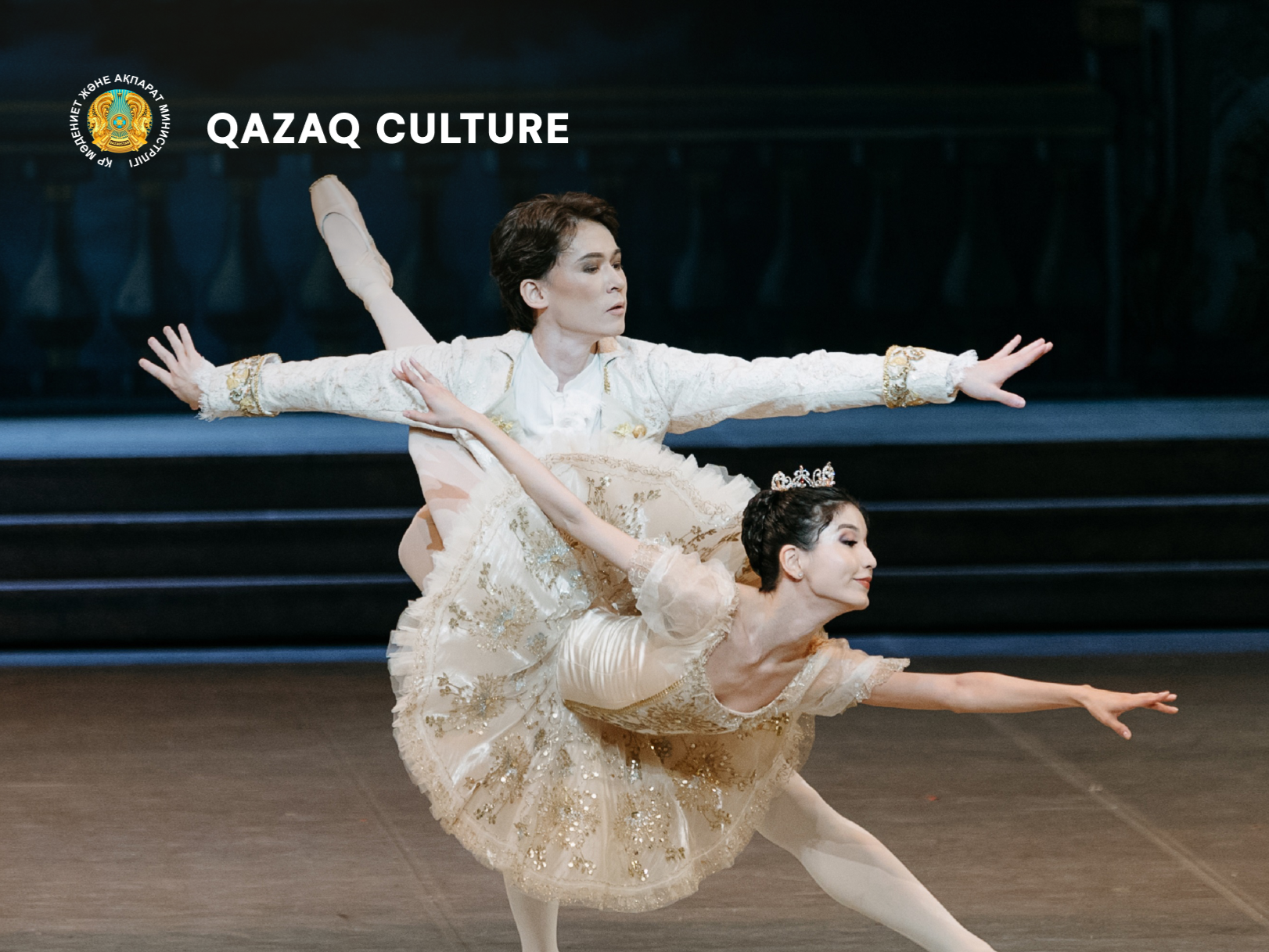
In a ballet career, there is an important boundary that is difficult to measure with awards. First, the artist travels to competitions, passes selections, performs on unfamiliar stages, and each time tries to prove worthy of being noticed. And then comes a moment when the roles change: you are no longer evaluated - you are invited.
This is exactly where the leading soloists of "Astana Opera" Yerkin Rakhmatullayev and Shugyla Adepkhan are today.
Once, China was a space of professional challenges for them. Shugyla performed here during her studies at the Kazakh National Academy of Choreography, Yerkin repeatedly participated in international competitions and returned with awards. Now they come to Hong Kong in a different capacity - as invited artists for the international gala "Future Stars 2026".
The very name of the project this time acquires an almost symbolic meaning. On one stage meet those who are just beginning their professional journey and artists who have already come far enough on this path to share their experience.
The organizers of the Jean M. Wong Ballet School had long been following the performances of Kazakh soloists - not only on stage, but also on social networks. As a result, interest turned into an invitation.
This is a curious detail of the modern ballet profession. Today, international reputation is not only built during performances. The world of dance has become much more open: festivals, video recordings, social networks, and professional contacts allow artistic directors to observe an artist for years, even before a personal meeting.
Shugyla Adepkhan returns to China with Yerkin Rakhmatullayev with the pas de deux from Riccardo Drigo's ballet "Talisman". This number is already well-known to the pair - they recently performed it together at an international arts festival. Therefore, work on the Hong Kong performance actually began long before the trip itself.
"This return is special for me. I first performed in China as a student, and now I come here as an artist of a professional theater. Together with Yerkin, we will perform 'Talisman' again, so we already have a shared feeling for this duet," says Shugyla.
But Yerkin's story in Hong Kong begins even before the gala itself.
He arrived almost two weeks before his partner to work with the students of the Jean M. Wong Ballet School and perform the role of Prince in Tchaikovsky's "Sleeping Beauty".
It is here that it is especially noticeable how much his professional role has changed.
Just a few years ago, he himself competed in international competitions alongside other young artists. Now the organizers entrust him with the main role in a performance with school graduates - essentially offering him to be a partner whom young dancers can look up to directly on stage.
In ballet, such a transfer of experience happens in a special way.
Not everything can be explained with words here. A young artist learns by how a partner holds their body, calculates a jump, enters a lift, reacts to music, and copes with the unexpected. Sometimes one joint rehearsal gives more than a long conversation about the profession.
"The organizers invited us precisely as experienced artists. This is important to me because it's no longer just about my own performance. There is an opportunity to share what we ourselves have gained over years of working on stage," Yerkin notes.
The Jean M. Wong Ballet School has existed since 1960 and has built a whole tradition around this principle. Its best students and graduates get the opportunity to dance alongside invited professionals. For young artists, the big stage becomes not a final reward for their studies, but a continuation of the educational process.
And in this format, it is especially clear how continuity works.
Once, Yerkin and Shugyla themselves learned from older masters, observed famous artists, competed in competitions, and gradually accumulated their own stage experience. Now part of this journey returns to them from the other side.
But the international invitation has another meaning for them.
In the ballet world, an artist almost inevitably represents not only themselves. Through their technique, the audience and the professional community begin to see the school, the theater, and the cultural environment from which they emerged.
That is why Yerkin perceives every foreign performance as an opportunity to expand interest in Kazakh dancers in general.
"If we are invited again, it means that not only a specific artist but also the level of the school is noticed. I hope that after our performances, international projects will pay more attention to other strong artists from Kazakhstan," he says.
Perhaps this is one of the most accurate signs of professional maturation.
First, a young dancer dreams of being alongside famous artists.
Then, they themselves become the one alongside whom a new generation is brought onto the stage.