Alan Buribaev takes you behind the scenes of music
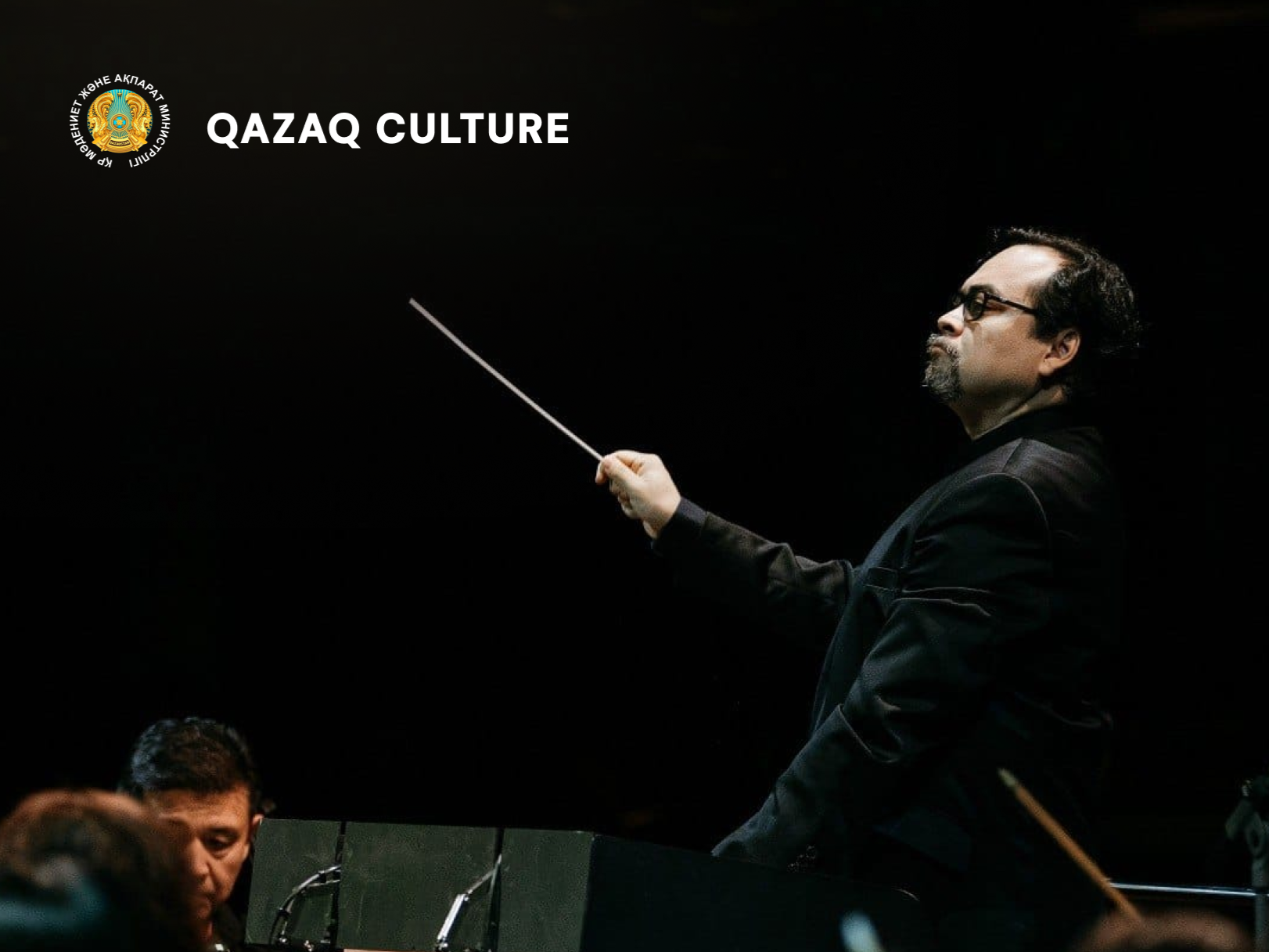
What happens to music when a conductor doesn't just perform a score, but begins to break it down together with the audience—stopping the orchestra, returning to a specific theme, unexpectedly recalling another piece, and revealing connections that a listener might otherwise miss?
This is precisely the foundation of Alan Buribaev’s original series, "Concert – A Story with Alan Buribaev." Here, the traditional distance between the stage and the hall shrinks, transforming a symphonic concert into a conversation about how music is structured and the stories hidden within it.
During the concert, Buribaev addresses the public, pausing at specific fragments of the score and immediately working through them alongside the orchestra. Sometimes a single intonation leads to another piece, a musical theme sparks a historical association, and the discussion of a composer stretches far beyond the notes—touching upon literature, art, and philosophy.
On September 10, the K. Baiseitova Chamber Hall at the Astana Opera Theatre will host the third concert of this cycle. The first two evenings were dedicated to Ludwig van Beethoven’s Seventh Symphony and Robert Schumann’s "Rhenish" Symphony. Judging by audience feedback, the format has proven unconventional even for regular classical concertgoers, with many admitting that time flew by and left them wanting more.
This time, the musical journey will stretch even wider. A single program will bring together Antonín Dvořák, Edvard Grieg, Richard Strauss, and Jean Sibelius.
Dvořák’s virtuosic overture "Carnival" was written shortly before the composer’s departure for America. Placed alongside it is Grieg’s deeply expressive "The Last Spring" (Note: referring to Grieg's "The Swan"). Another thread of the evening features two orchestral songs by Richard Strauss: "Tomorrow!" and "Evening Twilight." More than half a century separates their creation.
Why these pieces were placed side by side, and what internal dialogue arises between them, is one of the questions the program gradually reveals to the listener.
The centerpiece of the evening will be Jean Sibelius’s Second Symphony—one of the earliest major symphonies of the 20th century. It is rarely performed on the Kazakh stage, and this will be its premiere at Astana Opera.
For Alan Buribaev, this is far from just another piece in the repertoire. Sibelius’s Second Symphony is among his favorite compositions. The maestro has conducted it numerous times in various countries, with particularly memorable performances including tours with the Norrköping Symphony Orchestra of Sweden as part of the Czech Philharmonic subscription series in Prague, and a performance in the United Kingdom with the Royal Philharmonic Orchestra.
It is here that the core idea of the entire cycle becomes especially clear. Buribaev does not offer the audience a pre-packaged lecture about music; he demonstrates its inner mechanics directly at the moment of sound. Spoken word gives way to the orchestra, explanation is replaced by a musical fragment, and the listener returns to the work with an entirely transformed perception.
An essential component of this framework is the vocal performances. They do not exist in isolation from the symphonic program, but are tied to it—either directly or through associations—helping to build the overall dramaturgy of the concert.
Taking the stage this evening will be Madina Islamova (soprano), Artur Gabdiev (tenor), and the symphony orchestra of the Astana Opera Theatre. At the conductor’s podium is Honored Worker of Kazakhstan, State Prize Laureate of the Republic of Kazakhstan, and Principal Conductor of the theatre, Alan Buribaev.
This third "Concert – A Story" once again invites listeners to get a little closer to what usually remains hidden within the score: to hear not only the music of Dvořák, Grieg, Strauss, and Sibelius, but also to understand why works from different eras can unexpectedly echo one another—and how a single heard detail can change the perception of an entire symphony.