The Potential of Tourism through Cultural Sites: A New Development Vector for the Esik Museum-Reserve
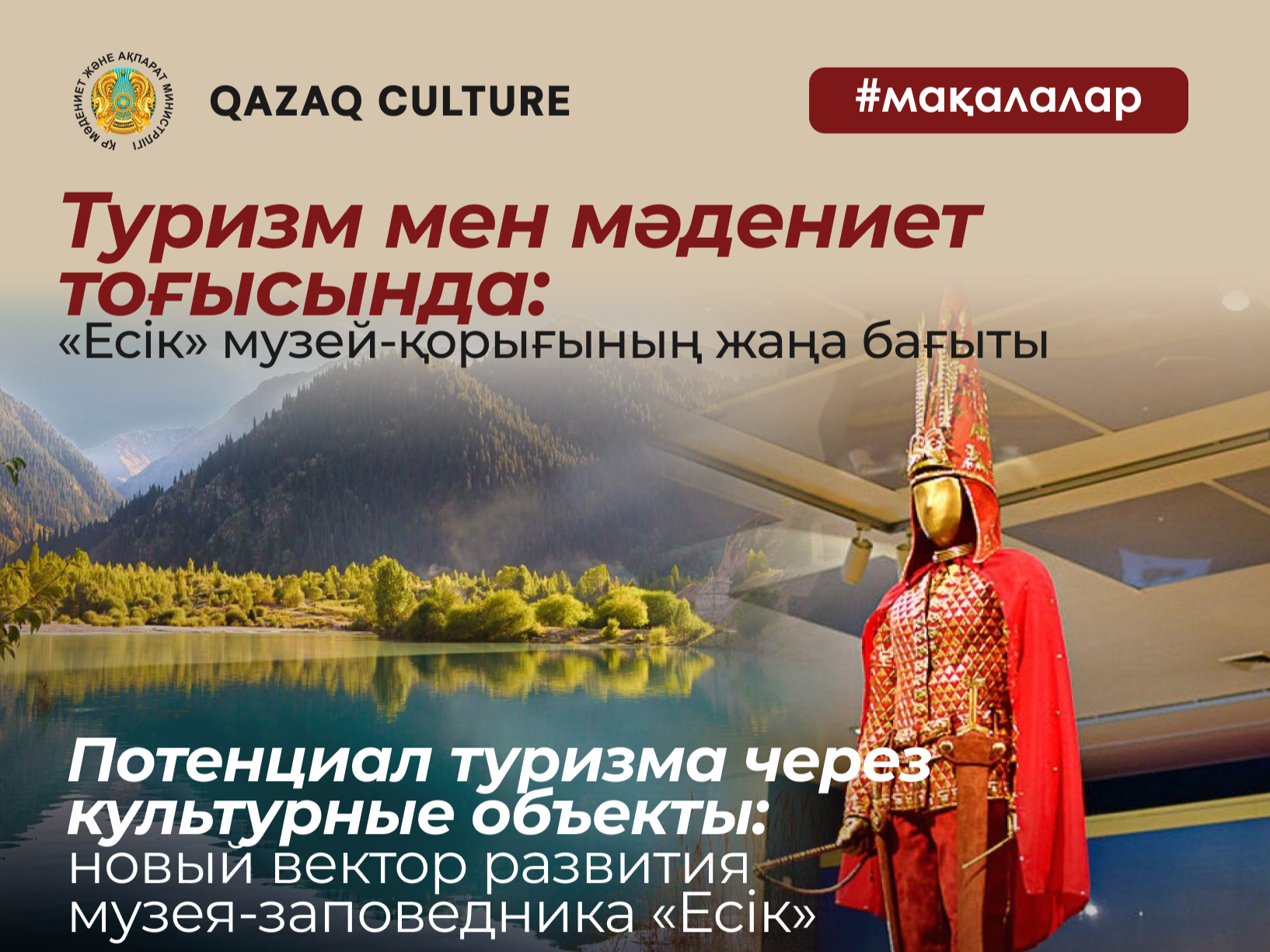
In recent years, tourism has expanded beyond the leisure industry and become a strategic area influencing the country's development. Amid growing competition for global tourism, places that offer a deeper understanding of history, national identity, and cultural heritage are becoming especially valuable. Museum-reserves play an increasingly prominent role in this system.
One such facility is the Esik State Historical and Cultural Museum-Reserve, a nationally significant museum. We spoke with Acting Director Dosym Zikiria about its new priorities, the development of its tourism product, and key objectives.
– Tourism is an area at the intersection of economics, culture, and security. What role should museum-reserves play in this system?
– Tourism doesn't generate immediate profits: its impact is often seen in the long term. Therefore, the key mission of museum-reserves remains unchanged: to preserve and protect historical and cultural heritage sites while simultaneously developing scientific research, educational programs, and tourism services. Today, there are 12 national museum-reserves in the country, many of which are located far from developed infrastructure and major transportation hubs. It's important to view them not only as cultural venues but also as a tool for strengthening the socioeconomic potential of the regions. Effective presentation of heritage as part of the tourism product—through engaging formats, informative routes, and diverse programs—helps increase visitor flow and makes a tangible contribution to local economic development, including increased budget revenues.
— What makes the Esik Museum-Reserve unique? What makes it attractive to tourists?
— The Esik Museum-Reserve is located in the area where the "Golden Man" was discovered in 1970—on the site of a historical pantheon with a concentration of Saka-Wusun burial mounds. It includes monuments from the Paleolithic to the Middle Ages: the settlement of Rakhat and the medieval settlement of Talgar. The museum-reserve thus brings together in a single space the heritage of southeastern Zhetysu—from the Stone Age and the Saka-Wusun period to the era of the Turkic Khaganate and the Great Silk Road. Today, we conduct scientific and archaeological research in the Almaty region and the Zhetysu province and are consistently implementing the course we set in 2011—developing the museum-reserve as a scientific research center.
—What sites within the reserve are of greatest interest to visitors? What attracts foreign tourists more than Kazakhstani ones?
— The "Golden Man" and the heritage of the Saka-Wusun period are key points of attraction for the Esik Museum-Reserve. Both Kazakhstani and international guests primarily seek to learn more about these topics. Visitors from Turkey are particularly interested in the "Golden Man," as well as artifacts and information related to the Saka-Wusun and Turkic periods. Visitors from China and Korea often focus on the Great Silk Road. For domestic and foreign scholars, the most relevant materials are those on the Bronze and Early Iron Ages, the history of medieval Kazakhstan, and archaeological discoveries and cities of southeastern Zhetysu. Educational events with quest programs for schoolchildren and students also yield good results. The region's favorable conditions for ecotourism ensure a steady flow of tourist and educational groups.
– Today, there is much talk about the transition from mass tourism to cultural and educational tourism. What formats, in your opinion, should be developed in response to this demand?
– In the current environment, museum-reserves are becoming not only cultural spaces but also comprehensive educational and educational centers. As part of this process, the Esik Museum-Reserve has built an ongoing partnership with educational organizations in Almaty and the Almaty region, conducting special programs and events for children and adolescents. We are also effectively leveraging digital technologies to develop interactive tours, thematic online lectures, and educational content. These approaches make knowledge about historical and cultural heritage accessible not only at the regional level but also to citizens across the country.
– A tourism product is impossible without professional staff. What kind of specialists does the museum-reserve primarily need today?
– To systematically address the staffing issue, we organize student internships at the museum-reserve within the framework of memoranda with several Almaty universities and regularly introduce faculty to the specifics of our work.
Looking ahead – specifically, in 2026 – we plan to strengthen our collaboration with major tourism companies and universities that train specialists in this field. This will allow us to professionally develop the museum-reserve's tourism product and strengthen our human resources.
Furthermore, museum marketing specialists, PR managers, and personnel skilled in using artificial intelligence tools and digital technologies are particularly in demand today. How feasible is it to include museum-reserves in major tourist routes and clusters?
This is a very pressing question. Today, "Khazret Sultan" and "Ezhelgi Taraz Eskertkishteri" have already established themselves as museum-reserves within major tourist destinations. The Almaty and Zhetisu regions are considered to be year-round tourist destinations; ecotourism is particularly well-developed here. They are located along the route to destinations such as Oykaragay, Akbulak, Maralsay, Lake Esik, Zhasylkol, Turgen Gorge, the Esik Museum-Reserve, the Esik Obalary, and the medieval settlement of Talgar. Therefore, we are interested in developing these routes and fully incorporating the Esik Museum-Reserve into the tourist trail. This year, this issue will be discussed with the Almaty Region Tourism Department. This requires, first and foremost, high-quality internet, convenient visitor infrastructure, and outdoor camping services. Once the Sapar Center, currently under construction nearby, is operational, it will be possible to establish coworking spaces and host various events related to museums, scientific research, and tourism.
Furthermore, the introduction of a unified entry card for museum-reserves could stimulate the popularization of historical and cultural heritage and increase visitor flow. The Turkish Müze Kart project is an example.
– What will be the museum-reserve's priority areas in the coming years?
– Several important projects stand out among the priorities. At the initiative of the Ministry of Culture and Information, each museum has begun developing a development plan. One key area is connecting to the international Google Art & Culture platform. To achieve this goal, it is necessary to create high-quality digital content, increase international recognition, and attract foreign tourists—this is one of our main tasks.
Secondly, it is important to enhance the appeal of exhibits and exhibitions. Research and educational work, as well as high-quality service for tourists, are key indicators determining a museum's reputation.
Thirdly, we place particular importance on expanding international relations. This not only helps us present our historical and cultural heritage to the world but also strengthens the museum's research and human resources, opening up opportunities for exchange.
– What, in your opinion, should be changed at the state policy level to ensure that cultural sites fully realize their tourism potential?
– The state systematically supports the cultural sector. According to available data, 61 cultural sites were completed in 2025, and renovations were completed at 251 others. From 2022 to 2025, salaries for industry employees were increased by 20% annually, and 75 cultural workers received state stipends. This support will continue.
Nevertheless, issues remain to be addressed. Kazakhstan has 12 national-level museum-reserves, all located in the regions. Sometimes local authorities pay insufficient attention to practical issues—such as infrastructure, services, and inclusion in tourist routes—citing the fact that the museum-reserve is under the jurisdiction of the Ministry of Culture and Information.
By developing museum-reserves, the Ministry contributes to the growth of the cultural and tourist potential of the regions. The next task is to establish coordinated collaboration with local authorities and provide specific support to ultimately enhance the overall result, benefiting the country.
—If we imagine the museum-reserve as a "language" in which the country speaks to the world, what exactly can it tell foreign tourists today?
—If the museum-reserve is a "language" for communicating with the world, then it could demonstrate to foreign tourists the universality of art and culture, proving that some treasures require no translator. Through the "Golden Man" and artifacts from that era, we can clearly demonstrate the development of ancient metallurgy, iron processing, the use of gold as an artistic material, and the high level of jewelry craftsmanship. Furthermore, the influence of steppe culture on world civilization can be revealed through an explanation of the role of the early domestication of the horse: horse equipment, comfortable riding clothes, weaponry adapted for war, beverages and medicinal practices associated with horse breeding, the creation of a mobile army, inventions such as the cart wheel, and other innovations.
The point is that the museum-reserve is able to convey to foreign tourists the idea that human culture has been enriched by mutual influence, and the joint study and understanding of this heritage remains important today.