Kazakhstan in the Lens of a New Wave: Bauyrzhan Sadu on a Creative Industry Without Limits
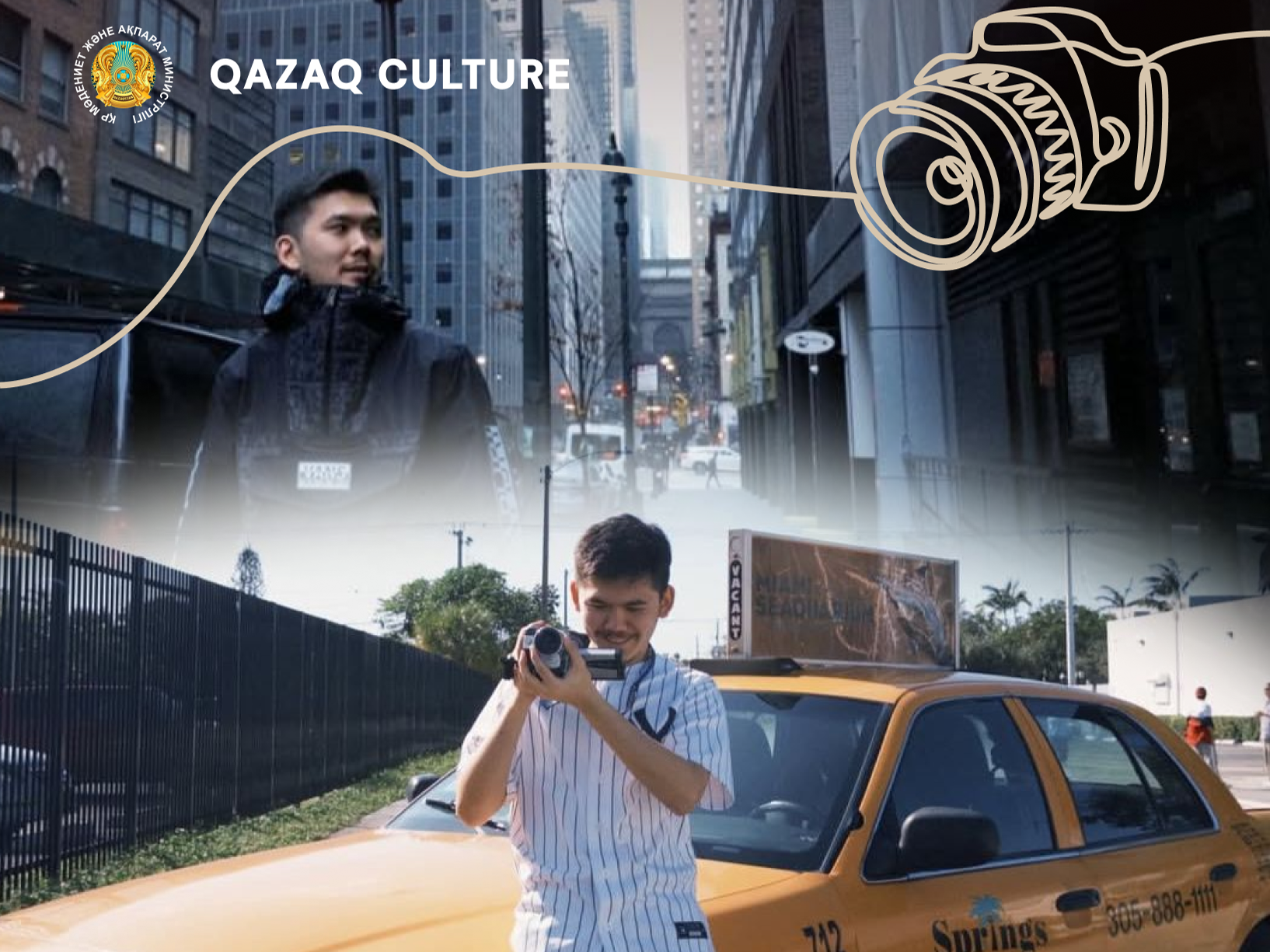
Kazakhstan's visual language is increasingly asserting itself beyond its borders. Music videos, commercials, and original videos are becoming spaces for artistic exploration, where frame, light, and rhythm become a distinct expression. A new generation of directors is working at the intersection of film, music, and digital culture, shaping the contemporary image of Kazakhstan's creative scene and proving that regional origins are no longer a barrier to international dialogue.
One representative of this new wave is director and music video maker Bauyrzhan Sadu, a 25-year-old artist from Kyzylorda whose work garners tens of millions of views, and whose projects reach far beyond the local market. Winning the international Canon competition in Amsterdam, filming in Europe, Asia, and the United States, and collaborating with major brands and artists have become a logical continuation of a journey that began with a simple desire to film and tell stories. In an interview with Qazaq Culture, Bauyrzhan discusses visual thinking, the differences between working in Kazakhstan and abroad, the importance of ideas in the age of technology, and why it's the inner vision that defines a director's caliber today.
– You're only 25, but the geography of your projects is already impressive. At what point did you realize that directing wasn't just a hobby, but your professional path?
– When I first started filming, I didn't perceive it as directing in the professional sense. I was simply interested in observing life, capturing moments, working with imagery, and telling stories through the frame. The camera became a tool for exploring the world for me – a way to express emotion, character, and atmosphere. I wasn't thinking about a profession; I was simply doing what truly captivated me.
This understanding came gradually. At some point, I noticed that while filming, I was completely immersed in the process and lost track of time. If the day flies by unnoticed, if you're ready to return to it again and again, despite fatigue, then it's no longer just a passion. It was then that I realized that directing wasn't just a casual interest, but my professional path.
– You won the international Canon competition in Amsterdam, beating out competitors from 35 countries. What did this victory mean to you?
– I took part in the international Canon competition in Amsterdam, where competitors from 35 countries created video works in various categories – lifestyle, travel, and short films. I chose the short film category. I had two weeks to complete the assignment, during which time I had to fully realize my idea.
The competition was highly organized: about 100 creators from all over the world were invited to Amsterdam, and the atmosphere was incredibly vibrant – each participant presented their own style and vision. It was a powerful professional environment. Ultimately, I took first place in my category.
Winning was a major milestone for me. I won an EOS C50 camera, which hadn't yet been released. Two months later, at Canon Day, I was officially presented with it. Already during the process, I appreciated the capabilities of this camera – its wide dynamic range, precise rendition of details in highlights and shadows, and flexibility in color correction.
The trip to Amsterdam was also special for me because it was my first visit to Europe. This victory is not only a personal achievement but also an opportunity to represent Kazakhstan on an international stage. It was important for me to show where I come from and the level of work achieved by young filmmakers from our country today.
– You've worked in the UAE, Europe, and Asia. What's the main difference between working in Kazakhstan and abroad?
– Having worked in the UAE, Europe, and Asia, I realized that the main difference isn't so much in the level of equipment or budget, but in the approach to the process and organization of the work. In my opinion, Kazakhstan has many truly creative and flexible professionals. We're used to working in different environments, adapting quickly, and multitasking.
For example, in the United Arab Emirates, I noticed that they don't worry too much about marketing, which is why they shoot videos there that we would have shot in Kazakhstan five years ago. And when I showed our work, many were genuinely amazed by the level of ideas and production.
One of the key differences is specialization. Abroad, a clear system is often established: each specialist is responsible for a specific function. In Kazakhstan, professionals are more versatile – a camera operator, producer, or director often understands the entire process and can be flexible to address different challenges. This provides a distinct advantage in the speed and creativity of solutions.
Europe has particularly influenced me in terms of its insight and professional perspective. Many strong creators, production teams, and creative industry leaders are concentrated there. The opportunity to interact with such people, observe their approach to detail, visual language, and discipline in their work, has been an important stage in my professional growth.
– You've shot over 30 music videos for artists. Who was the most challenging and interesting to work with?
– Each artist is a world unto themselves, so working with each is both challenging and rewarding in their own way. With Bagzhan Oktyabr, we tackled technically challenging and large-scale projects. Much of the filming took place in Turkey, and one of the most memorable projects was a music video for which we built a wooden raft and installed it right in the center of Lake Kaindy. Bagzhan stood and performed a song in the middle of the water—this required serious preparation, production, and team coordination.
With Miras Zhugunusov, the process is different—it's more about creativity, bold visual solutions, and working with a large team. Here, it's not just the technical execution that matters, but also the atmosphere, the energy on set, and the synchronicity of everyone involved.
Overall, I value the fact that each project is a challenge and a new experience. And, of course, I'm pleased with the results: all the videos I've shot receive at least 10 million views on YouTube. This demonstrates that the viewer feels and appreciates the work.
– Your portfolio includes famous brands. What is your signature style?
– For me, working with the camera is, first and foremost, a way to convey the energy and character of the subject. When it comes to a music video, my goal is to bring out the artist's charisma so that the viewer doesn't just watch the video, but feels it. It's important to me to evoke emotion—whether it's delight, nostalgia, tension, or inspiration. The main thing is that something stays with them after watching.
It's always difficult to talk about one's own signature style—it's easier to see from the outside. I don't try to artificially create a signature style; rather, I strive to be honest on camera and approach the story as I feel it in the moment. Perhaps it's this sincerity and attention to detail that distinguish my work.
As for commercial projects, there are strict brand guidelines, requirements, and visual standards. In such circumstances, maintaining complete artistic freedom is virtually impossible. However, even within strict briefs, I try to find room for creative expression—in lighting, composition, and editing dynamics. Sometimes, on more creative brand shoots, I get to express myself a little more. But overall, I understand that in commercial work, the most important thing is solving the client's problem, and that's part of being a professional. - What do you think about mobile photography? Can a phone replace a professional camera? How do you choose the right camera?
- A smartphone certainly can't completely replace a professional camera, especially in large-scale productions. But in today's reality, shooting with a phone is quite possible – technology allows for decent results. The most important things in shooting are the idea and the light. But if the light is poor, the idea is washed out, and you're relying solely on expensive equipment, even the most modern camera won't save the project.
A camera should be chosen based on the task: the format, location, and shooting conditions. Equipment is just a tool; the author's vision remains decisive.
- What opportunities and conditions have been created in Kazakhstan today for the development and self-realization of young creators?
- Today, Kazakhstan truly has many opportunities for the development and self-realization of young creators. The market is open, communication has become easier, and if you want, you can directly contact almost any artist or producer, pitch your idea, film a project even without a large budget, and build a strong portfolio. I'm convinced that much depends not so much on the country itself as on the individual—their mindset, initiative, and willingness to work. Opportunities exist, but it's important not to wait for an invitation, but to create them yourself.
– What projects are you working on now? You're in America right now; what are you filming? What are you planning for the near future?
– I'm currently in America, combining vacation with work. At the same time, I'm filming music videos for artists like Miras Zhugunusov and Kalifarniya. It's an interesting experience—working in a new environment, with a different visual context and mood.
I plan to return to Kazakhstan soon: I'm already receiving many offers to work on. Several new shoots and projects are coming up, which I think we'll be able to discuss in more detail very soon.
– What would you say to aspiring young people from the regions who dream of film and directing?
"I'm from the region myself, so I want to say the most important thing: where you're born doesn't define your capabilities or limit your ambitions. Today, everyone has a camera in their pocket more powerful than the one famous directors used just 20 years ago.
It all comes down to discipline, constant practice, and a keen eye. Film as often as possible, don't be afraid to make mistakes, and don't wait for someone else's permission or the "perfect moment." Cinema doesn't start with a big budget, but with an idea and an inner desire to tell a story.