National Roots in Motion: Sultanbek Gumar's Choreography as a Dialogue of Eras
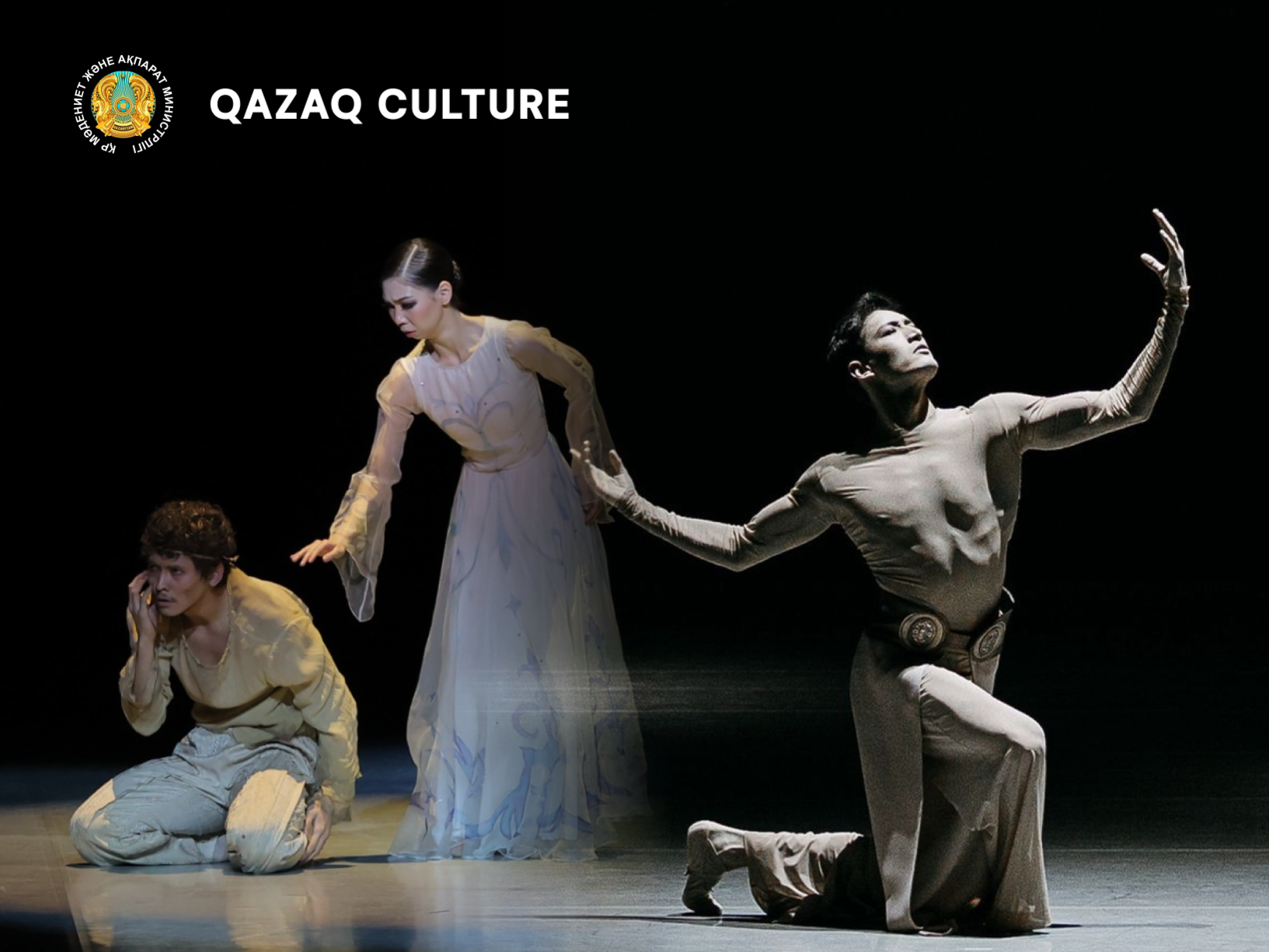
The art of choreography is a unique form of artistic expression, in which movement becomes a carrier of meaning and cultural memory. Dance creates a space for dialogue between tradition and modernity, allowing for a new understanding of national images and artistic codes. In Kazakhstan, this dialogue is increasingly moving beyond classical forms, opening up new artistic horizons and reinterpreting national roots through rhythm and image.
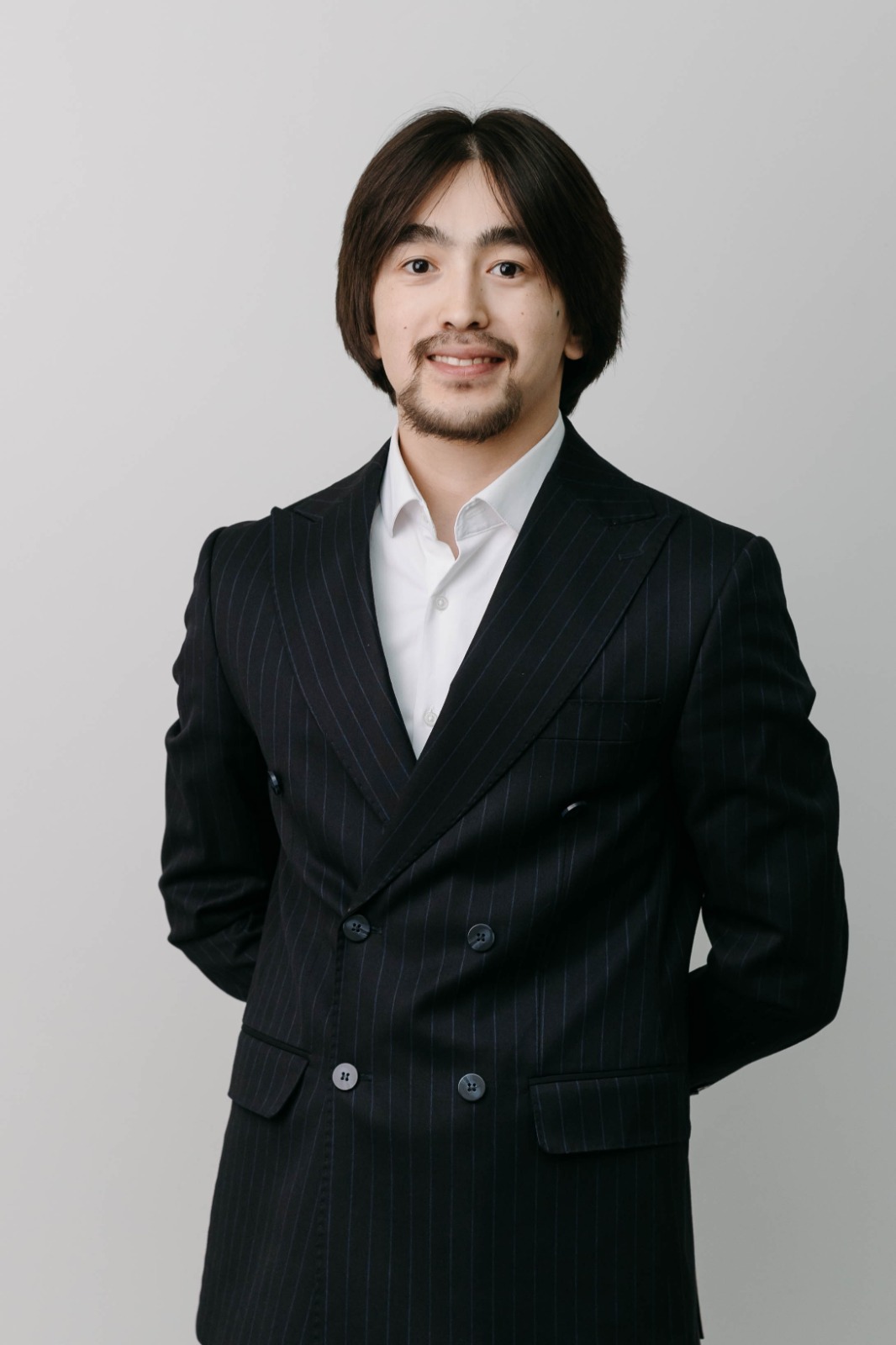
One of the most prominent representatives of contemporary Kazakhstani choreography is the talented choreographer and soloist of the Astana Opera Ballet Company, winner of the "Eren enbegi ushin" medal, Sultanbek Gumar. Just two years ago, he took his first independent steps in creating his own choreographic language within the framework of classical ballet in Kazakhstan. During this period, his productions, based on a subtle blend of academic school and national imagery, have captured the attention of audiences not only in our country but also abroad. The Qazaq Culture editorial team spoke with the choreographer about the development of a new choreographic language and the new productions he has in store for audiences in the near future.
– You're known as a soloist at the Astana Opera and have also established yourself as a choreographer. How do you manage to combine these roles?
– Working as both a soloist and a choreographer requires complete dedication, but at the same time, it significantly expands your creative possibilities. Since I dance in the company and am constantly in working condition, it's easier for me to demonstrate the dancers' movements and work with them directly. The main challenges are related to my busy schedule: in addition to participating in repertoire performances and preparing for premieres, I try to find time for my own new pieces.
If the Nomad Inspiration gala concert is on the program, I prepare all the pieces myself, and then we practically never leave the hall. I view this not as a burden, but as an opportunity. While I have the strength and energy, I consider it important to work hard and contribute to the development of Kazakh ballet.
Working with a team, I know the dancers' personalities, moods, and potential well, unlike, for example, guest choreographers. There are no barriers between us, so I rarely make mistakes when choosing performers for my productions. I am a colleague and friend to them; the dancers feel at ease with me, and the trusting atmosphere during preparation directly impacts the success of the production.
– Were there any thematic restrictions on your productions?
– No one set me any boundaries or suggested I work with a specific theme. I always stage what I feel and consider necessary, and perhaps that's why my works resonate with audiences. When choosing music, I always take an interest in the history of its creation and strive to maintain an inner harmony between sound and movement. It's important to me that the music and dance speak the same language: it's impossible to create a sad dance to a festive melody. I've been listening to Kazakh folk kuis since childhood, and the sounds of the dombra, zhetigen, or kobyz always evoke a special creative uplift in me. These traditional instruments seem to invite me to tell a story. Upon hearing the music, I immediately begin to see an image, and this is how my productions to the music of the KhasSak ensemble–"Rukh," "Toy bastar," "Aralym," "Kemel adam," and "Aṣsau," to the music of A. Raiymkulova–"Mankurt," as well as the composition "Alem" to the music of Kh. Shangaliev–came into being.
– How did the production "Rukh" come about, and what do you see as the reasons for its special response among audiences?
–I've long wanted to create a national choreographic production that would evoke courage, give inner strength, and inspire. While working on "Rukh," I turned to the story of Ablai Khan. In the composition, the performers are divided into three groups, analogous to the three zhuzes. Each has its own symbols and costumes with totemic images. At the center of the composition is the soloist, who strives to unite everyone under the sun. Conflict arises as the group progresses, and in the finale, the performers seem to climb to the summit, lifting the soloist up. This moment symbolizes the election of Abylai Khan.
The secret to "Rukh"'s success lies, first and foremost, in the music. I was greatly inspired by the composition "Amanat" by the ethno-folklore ensemble "KhasSak." It was with this composition that it all began. I gathered the members of the troupe, and in about a week we staged this number. The performers quickly grasped my idea and enthusiastically embraced the work. Their genuine interest inspired me even more.
In parallel with our main work at the theater, we were preparing a new production. When "Rukh" was completely finished, I approached the artistic director of the ballet company, Altynai Asylmuratova. She immediately supported the initiative. And so, the production was approved by the management.
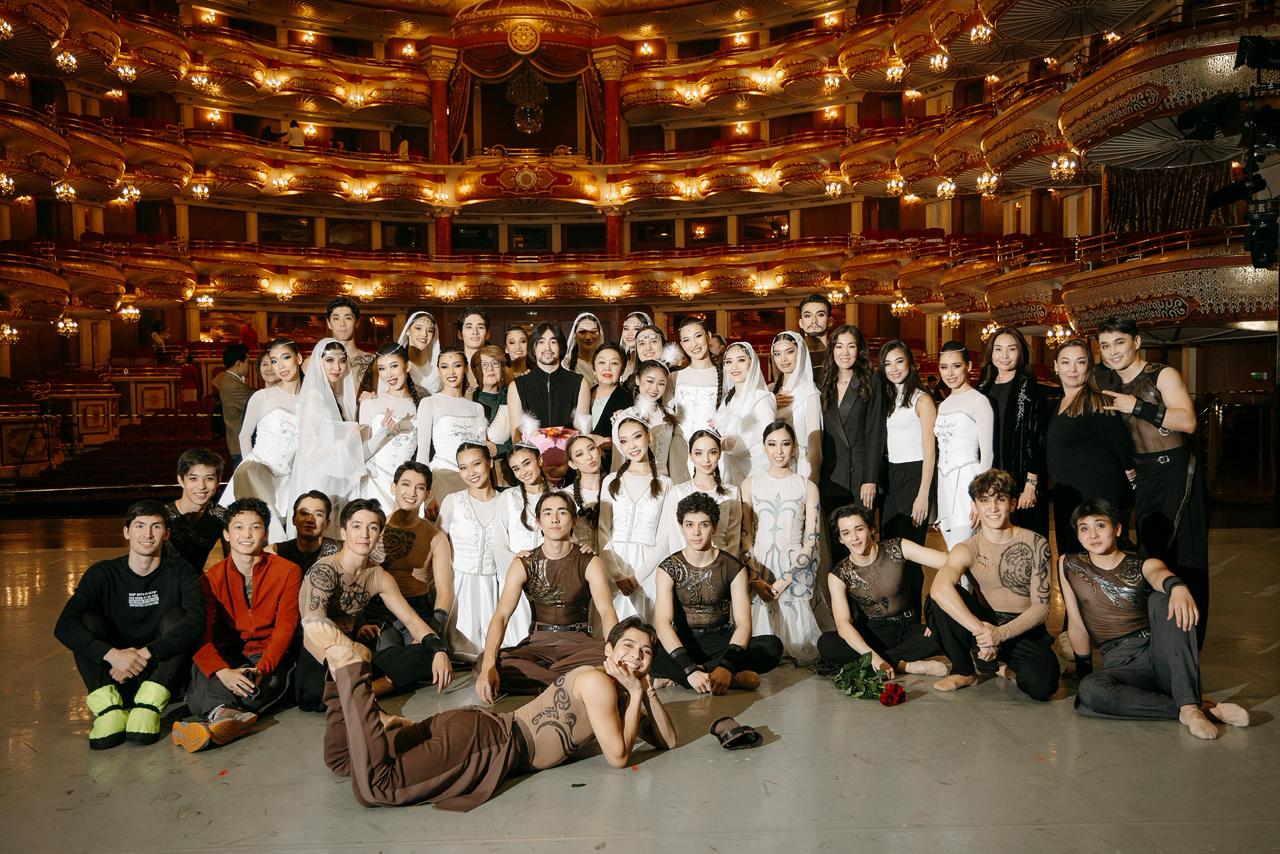
This work was recently presented on the historic stage of the Bolshoi Theater in Moscow. For me, it was a truly unforgettable event. I am sincerely grateful to the Ministry of Culture and Information of the Republic of Kazakhstan, the management of Astana Opera, and Altynai Asylmuratova, who always supports my endeavors.
During the tour, the dancers faced the important task of presenting Kazakh ballet at a high level, and they performed with particular inspiration. Thanks to the fact that the number was accompanied by the KhasSak ensemble, the performance was especially impressive.
The longevity of a dance depends largely on the performers themselves. If the dancers aren't interested in it, the production won't last long on stage. But if they want to dance this number, it will live on. One of the main advantages of "Rukh" is the dancers, who perform it with sincere inspiration every time. Therefore, I am confident that this choreographic work has a long stage life ahead. I'm especially pleased that both young dancers from the company and experienced soloists want to perform at Rukh.
– You participated in the Boris Eifman Festival and received international recognition in China. How did these events influence your further development as a choreographer?
– The All-Russian "Young Choreographer" Festival, organized by the Boris Eifman Dance Academy, was my first experience participating in a major professional festival as a choreographer. There, my original miniature "Mankurt" received high praise from ballet critics. Boris Eifman himself praised the work, saying, "Well done, Kazakhs!" Russian experts also noted that I managed to convey in choreographic language one of the most complex themes of Chingiz Aitmatov's novel "Snowstorm Stop" – the transformation of a man into a mankurt. Another important milestone was my participation in the First International Ballet Competition in Liaoning, China, where the jury included renowned masters of world ballet. I was deeply honored that they awarded my production of "Aṣsau" the "Best Choreography" prize.
One of the largest and most exciting projects in my career was the 5th World Nomad Games, held in Astana. Together with my assistants Aibar Toktar and Nima Tokov, we created a large-scale composition, bringing together dancers from the Astana Opera and Astana Ballet theaters, the Naz, Birlik, and Gulder ensembles, as well as soldiers and the Honor Guard company. Working with over three hundred participants was challenging, but the preparation process itself proved valuable and inspiring. Knowing that this was an international event brought with it a special responsibility, but we rose to the challenge. I also worked as a choreographer for the annual Chingay National Parade in Singapore. Participating in such festivals, competitions, and large-scale creative projects strengthens my desire to develop my choreography and continue my professional career in this field.
– What projects are you working on today, and what creative goals do you set for yourself in the near future?
– There is no limit to improvement, so I am constantly on the move and observing. I see elements of dance in people's gestures, in their everyday movements, and even in the moment of a fall. Much of this begins with music; it suggests the nature of the movement and the direction of the choreographic thought.
I am currently collaborating with contemporary composer Khamit Shangaliev, who is writing the music for my new one-act ballet, Four Truths – One Eternity. We have developed a complete rapport: I only need to outline an idea, and he immediately senses the direction in which to move. In this production, I address a topic relevant to contemporary society: the discord and internal struggles of married couples. Through the characters of five couples, I depict the five stages of love: from emotional connection, through a period of adjustment and mutual understanding, to conflict, the revelation of true personalities, the subsequent acceptance of the partner for who they are, and the discovery of true, everlasting love. For now, I can only describe this concept. I invite audiences to see the rest at the premiere!