From dombra to the big screen: how Kazakhstani culture was heard in Avaza
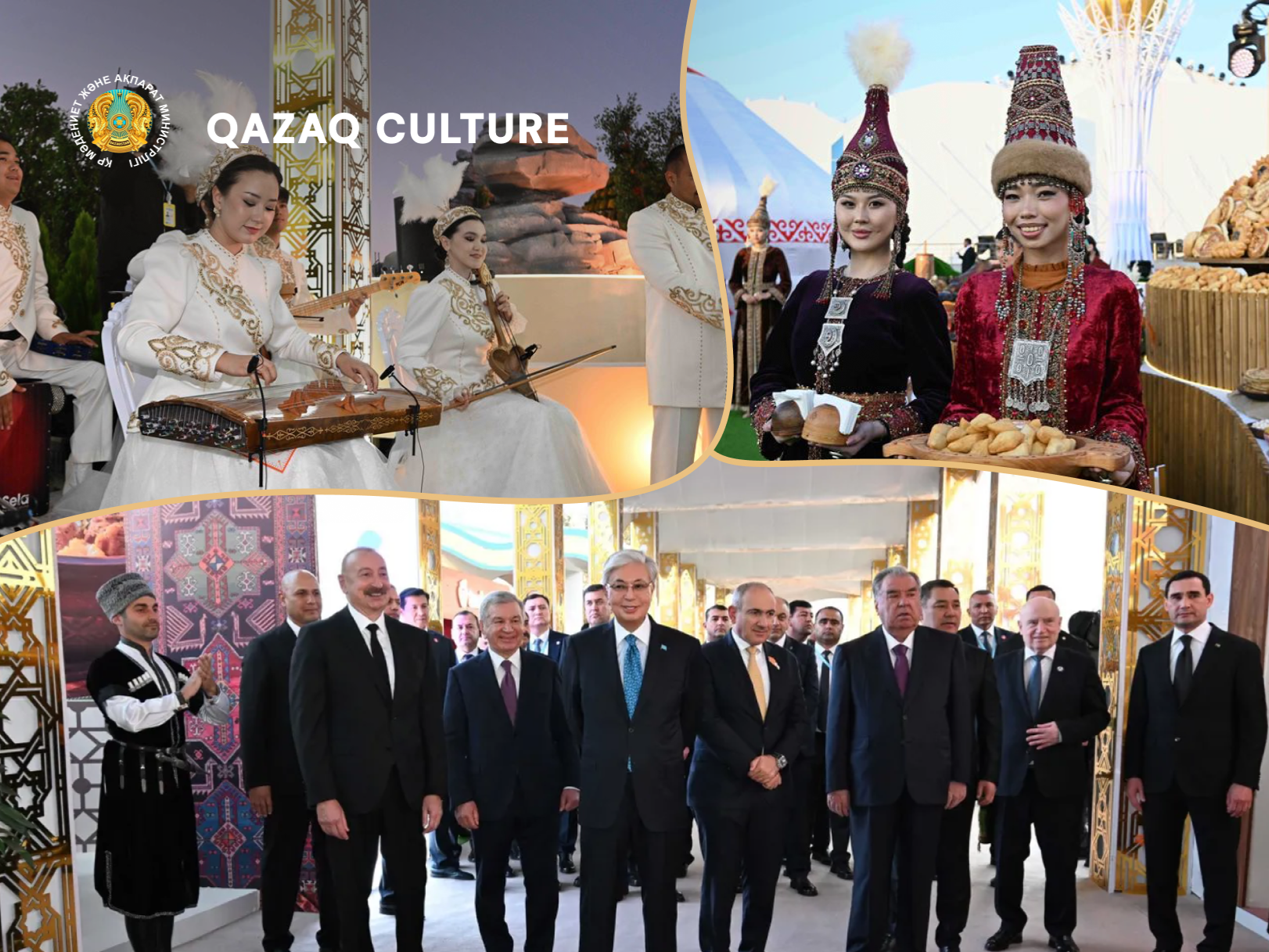
For several hours, diplomatic protocol in Awaza gave way to another language – the language of taste, music, craft, and cinema. No lengthy negotiations or official declarations were required here: countries were represented by national dishes, ornaments, the sounds of traditional instruments, and stories brought to the screen.
On October 8, the cultural program of international events in Turkmen Awaza combined several formats at once. Kazakhstan's President Kassym-Jomart Tokayev, along with the heads of CIS states, visited the National Dishes Festival, where each country had the opportunity to tell its story not through figures and documents, but through cultural images.
Kazakhstan presented a national pavilion divided into several thematic zones. One exhibition combined the country's historical and cultural heritage with its modern achievements – a peculiar dialogue between past and present, which increasingly defines the image of modern Kazakh culture today.
This format is particularly organic for traditional culture. National cuisine here becomes more than a set of recipes, craft – more than decorative art, and music – more than a concert number. Behind each of these elements lies the memory of generations, everyday habits, and the people's idea of beauty, hospitality, and peace.
Culture you can taste
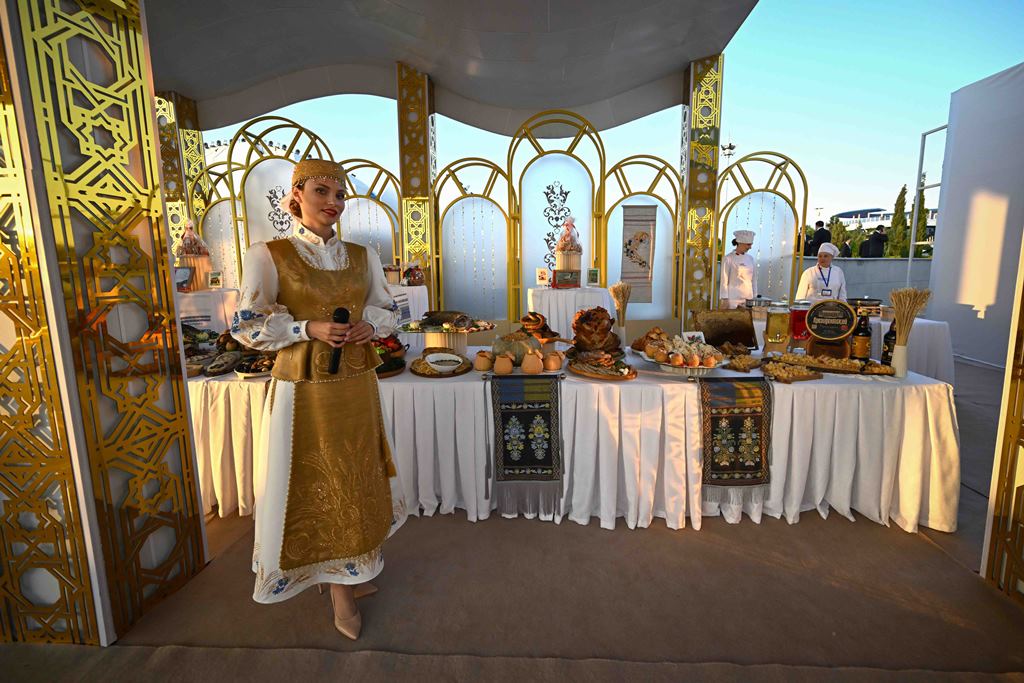
The central part of the festival was national cuisine. Guests were presented not only with ready-made dishes – chefs demonstrated the process of preparing traditional food.
There is special symbolism in this. A recipe rarely exists separately from the history of a family or the place where it originated. The method of preparation, the sequence of actions, the presentation of the dish – all of this is also part of cultural memory.
The festival in Awaza precisely allowed to see national cuisine in this capacity – as an element of intangible heritage.
Turkmenistan presented its own traditions in particular detail. The national pavilion showcased melon crops, fruits, baked goods, decorative and applied art items, and famous Turkmen carpets. Guests could also observe the preparation of national dishes.
Gastronomy was complemented by the literary and musical composition "Oguzlar", and then participants were offered traditional treats in the white yurt "Ak öý" set up on the site.
Thus, the festival gradually transformed from an exhibition of national cuisines into a much more comprehensive cultural route.
When the Dombra begins to play
Awaza's cultural program continued with the language of music and dance.
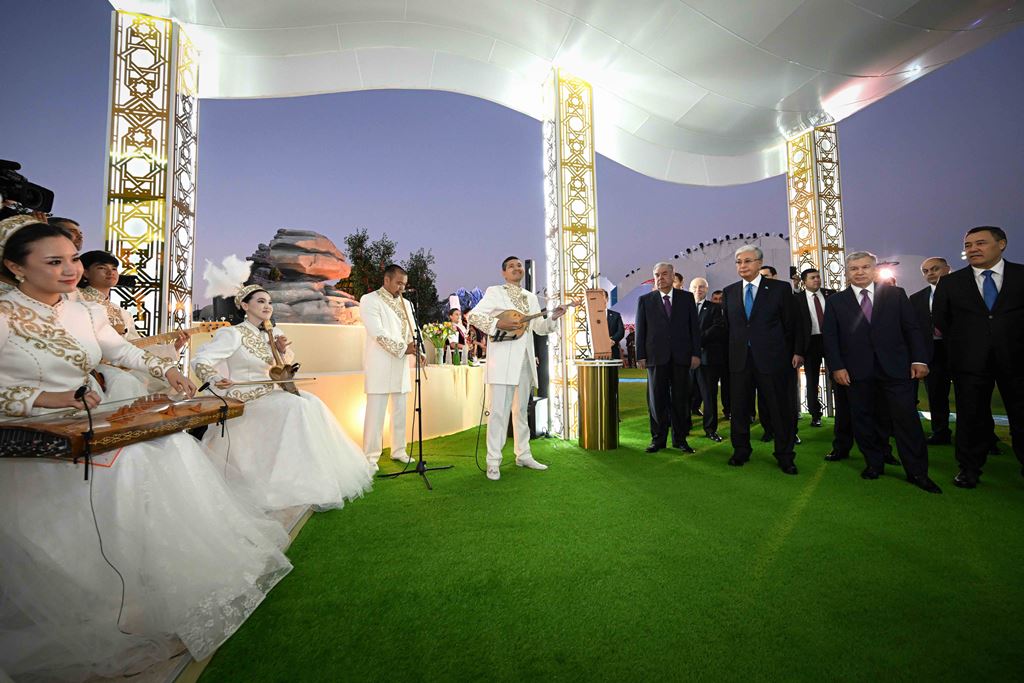
A concert of art masters from CIS countries took place on the territory of the fountain complex. Kazakhstan was represented here by the ensemble of dombra students from the Kazakh National University of Arts and the State Dance Ensemble "Saltanat".
The very proximity of these two collectives is symbolic. The dombra represents one of the most recognizable foundations of Kazakh musical tradition, while stage dance shows how national plasticity and artistic images continue to live on in professional art.
In one concert, they performed alongside the Pyatnitsky State Academic Russian Folk Choir, Belarusian "Pesnyary", the "Khoroshki" choreographic ensemble, Turkmen performers, and other artists from the Commonwealth countries.
It is here that the concept of cultural dialogue acquires a literal sound: one stage becomes a meeting place for different musical schools, folklore traditions, and performance styles.
Kazakh history on the big screen
Cinema became another language of this conversation.
In Awaza, the results of the Intergovernmental Television Film Competition of CIS countries "Flight of the Steed: Strength and Grace" were announced. The image of the horse was chosen not by chance – for many Eurasian cultures, it is associated not only with daily life but also with historical memory, equestrian traditions, and ideas of freedom.
Kazakhstan was represented in the competition by director Temirbek Amanzhol's film "Eva. Batyr qyz", which took third place.
The film tells the story of Eva Zhigalina – a kokparshy girl whose life is closely linked to traditional equestrian culture. For the director himself, this work was a debut. Through the story of one heroine, the author addresses a broader question – why equestrian traditions continue to attract people of the 21st century and how national culture can be preserved without becoming a museum exhibit.
In a certain sense, this film was particularly resonant with the entire Awaza program.
After all, the national pavilion, the dombra, traditional cuisine, and cinema all spoke of one thing – heritage continues to live when it enters the present day.
The main prize of the competition was awarded to Russian director Robert Frantsev for his film "Akhal-Teke Horse – National Treasure". First place went to the Turkmen film by Rahymberdi Annagulyyev "Father's Legacy", and second place to the film by Azerbaijani director Mirsadig Agazade "...Golden Horses of Karabakh...".
Another language of diplomacy
Awaza became a venue for major political meetings for several days. But alongside the official agenda, there was another conversation – significantly less formal and, perhaps, more understandable without translation.
Countries presented themselves through what had been created over decades and centuries: through the taste of national cuisine, music, the movement of dance, craft, and on-screen stories.
Kazakhstan, in this cultural panorama, was presented in several dimensions at once – from the historical heritage of the national pavilion to young dombra players, professional dance, and modern documentary cinema.
Thus, traditional culture ceases to be merely a memory of the past. It becomes a way to tell about the country today – in a modern language that still recognizes ancient melodies, images of the steppe, and the memory of generations.