Kazakhstan's Youth: A Synthesis of Tradition and Innovation as a Path to Prosperity
In the context of globalization, Kazakhstani youth skillfully combine respect for their traditions with an active interest in modern professions and global culture. This generation not only preserves cultural heritage but also actively influences the development of new trends, openly embracing innovation and global trends. Kazakhstani youth demonstrate initiative and a desire for self-development, successfully integrating national values into modern reality. We spoke with orientalist and cultural expert Yerkin Baidarov about how to preserve the national cultural code and adapt it to the new demands of the times. In our interview, we also explore why the ability to synthesize tradition and modernity is becoming a key factor in the development of the current generation and how this will impact Kazakhstan's future.
– In Kazakh culture, work has traditionally been viewed as an internal norm and a manifestation of respect. Could it be said that modern conditions are opening up new forms of industriousness while preserving its core values?
– In Kazakh culture, work has always been an integral part of nomadic life, a necessity for survival and adaptation. Modern conditions are opening up new forms of industriousness while preserving its core values. Our President Kassym-Jomart Tokayev actively uses the concept of "the value of labor and hard work," emphasizing its importance in creating a strong and just Kazakhstan. In the context of global change, hard work is taking on new forms, and these values remain an important guide for societal development. The Ministry of Labor and Social Protection's implementation of the Labor Market Development Concept for 2024–2029 is aimed at increasing job opportunities, improving working conditions, and providing decent wages. These initiatives are designed to create a more sustainable and equitable system where everyone's work is valued and rewarded, and social guarantees will contribute to the stability and prosperity of society.
In a global context, studying the experience of China and the processes of "Chinese-style modernization," it can be said that "the values of labor and hard work" should become more than just words, but also an indicator of success for both the country and its citizens.
– For Kazakh society, education has always meant not only acquiring knowledge but also the ability to think, listen, and draw conclusions. How does today's accessibility of knowledge influence the development of independent thinking and inner culture in Kazakhstan?
– Education has always been an important part of Kazakh culture, signifying not only the acquisition of knowledge but also the ability to think, listen, and draw conclusions. This is reflected in proverbs: "Жэрдің сәні – егін, эрдің сәні – білім" ("The earth is adorned by crops, a person by knowledge"); "Кісінің көркі киім емес – білім" ("A person is adorned not by clothes, but by knowledge"); "Білек бірді, білім мыңды жығады" ("The strong will defeat one, the learned – a thousand"); "Білім – өмір шырағы" ("Knowledge is the candle of life"). However, in the past, education was perceived as a "candle of life" rather than a stepping stone for career advancement. Today, education has become more accessible, but this has led to the emergence of specialists who do not always possess in-depth knowledge in their field. It is important to remember that quantity does not always equate to quality.
Nevertheless, online platforms, open lectures, and cultural projects offer people the opportunity to develop independent thinking and inner culture, as well as bring new impetus to both the personal and collective development of society.

– Can it be said that the modern cultural environment in Kazakhstan creates more opportunities for a conscious choice of values than before?
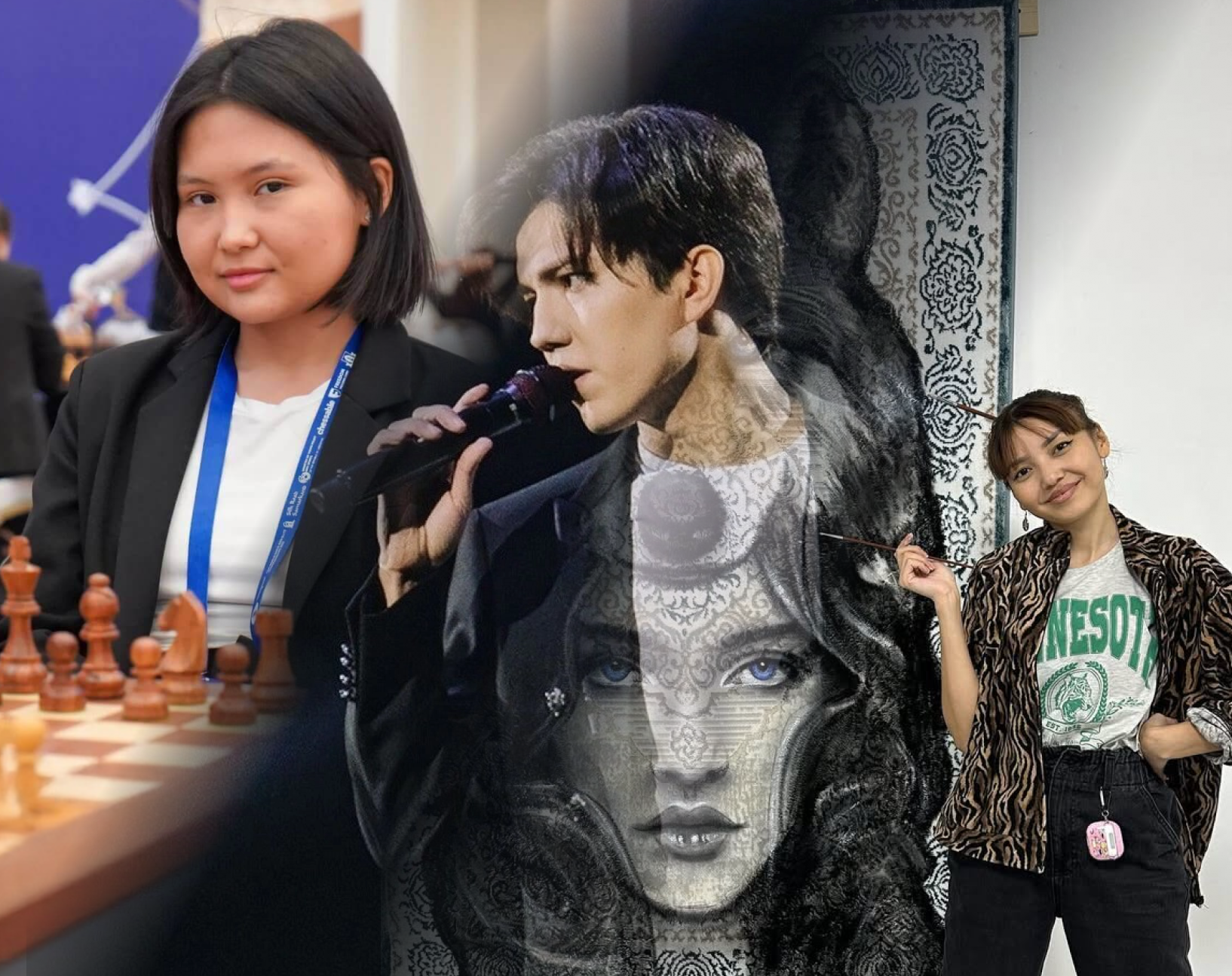
– Traditionally, moral guidelines were formed through family, personal example, and oral culture. Today, books, media, and educational and cultural spaces have been added to these sources. Modern reality truly opens up more opportunities for a conscious choice of values, and Kazakhstan is no exception. Books, media, and cultural initiatives have enriched our lives with new opportunities and opened up access to the best achievements of world culture. At the same time, we must not forget who we are. Kazakh culture, as part of global civilization, has absorbed elements of nomadic, pre-Islamic, Islamic, Persian, Chinese, Russian, and Western traditions, while maintaining its uniqueness. Today, Kazakh culture actively contributes to the global cultural community, as can be seen, for example, in the successes of Dimash, Bibisara, and other Kazakh youth.
For Kazakhstan's full development on the global cultural stage, it is important to create a model of society where the success of each citizen results from the overall prosperity of the country.
– Today, topics of responsibility, respect, communication ethics, and trust are increasingly discussed. Do you see this as a sign of strengthening moral culture in modern society?
– Strengthening moral culture in modern society depends primarily on society itself. Family and professional communities reflect the established social system and are subject to change. The ideas and trends set by the "elites" play a key role in this process, creating images that those lower down the social ladder begin to emulate. Strengthening moral culture is possible, but not entirely easy, as human relationships remain relevant. This is reflected in works of world literature, beginning with antiquity.
In the context of building a New Kazakhstan, strengthening moral culture can only be achieved through changes within oneself: in one's attitude toward oneself, work, society, and the state.
– Kazakh tradition has always strived for a balance between preserving roots and being open to new experiences. To what extent is the ability to synthesize tradition and innovation a strength of today's generation in Kazakhstan?
– In the context of globalization and technological change, humanity faces the challenge of preserving the roots of national cultures amidst the influence of the outside world. It is important to preserve one's cultural code while simultaneously opening up to innovation and adapting it to develop the "Kazakh way" in various spheres, including culture, science, and economics. Today's generation in Kazakhstan has every opportunity to synthesize tradition and innovation.
– Hard work, the pursuit of knowledge, and moral responsibility remain living values, but they are expressed differently. Is this true?
– Epochs and people change, but hard work, the pursuit of knowledge, and moral responsibility remain living values. It cannot be otherwise, since labor created man. However, in the age of artificial intelligence, this thesis could lose its meaning, triggering a reverse process, once again returning humanity to the margins of history. It is important not to seek meaning in new expressions, but to focus on work in the field where you feel comfortable and enjoy it—this will give life new meaning.